

Welcome back to Inquiry. I’m your host, Kelly Chase.
This episode is, in some ways, two episodes in one. It began as an exploration of Sigmund Freud, Edward Bernays, propaganda, psychoanalysis, and the secret history of how the modern machinery of perception management came to be.
And then, somewhere along the way, it became something else.
What started as an investigation into the history of gaslighting and the engineering of consent became a much more personal meditation on my own experience inside ufology, especially in light of the recent allegations against my former best friend and creative partner, Jay Christopher King.
Last fall, Jay and I released an episode called Cosmosis: Origins, in which we addressed, among other things, the fact that something serious and profoundly destabilizing happened in the fall of 2023. Something that changed everything about how I understood this field, my work, my relationships, my safety, and reality itself.
At the time, I was very cryptic about it. And I was cryptic because I was afraid.
I honestly believed that speaking clearly about what had happened would put my life, and the lives of people I love, at risk. I no longer believe that is the case. Or, more precisely, I no longer believe that what I came to understand about what happened is actually what happened, and I’m no longer willing to live in fear.
That is not an easy thing to say. It is not an easy thing to admit. But this episode is my first real step toward accountability with this community, toward untangling the story I was living inside, and toward figuring out what actually happened.
Because if my work is going to mean anything, then the standards that I apply to others have to apply to me, too. Discernment can’t only be something I encourage from other people. Truth can’t only matter when it vindicates me or my positions. And perception management doesn’t become less dangerous or less ethically fraught because it conveniently covers up what I’d prefer to keep hidden.
A couple quick things before we dive in:
The title of this episode, Starlight Sickness, comes from a song by Helico Tele that has been haunting me for reasons I’m still not sure I can fully explain. It has been one of those strange little synchronistic gifts that found me at exactly the right moment and gave language to something I was still trying to understand. So this is also my shoutout to Helico Tele for the inspiration. The link to the song is HERE, and I really hope you’ll go listen.

If you’d like to support my work, you can join the Patreon at inquirywithkellychase.com. Patrons get early access to ad-free episodes, monthly community Zoom calls with me, and access to our private Discord server. I’ve also started implementing weekly office hours there, so you can stop in to chat, ask me questions, or just hang out with the community. Membership starts at just five dollars a month, and your support helps keep this work independent.

And finally, if you’re in Los Angeles, I want to let you know that I’m doing a live show on Sunday, August 2nd at 7 pm at the Philosophical Research Society with my friend and fellow experiencer Daniel Noah, who is the co-founder of SpectreVision and the Director of SpectreVision Radio.
The event is called Disclosure Exposure: The Emotional, Spiritual and Psychological Complexities of Direct Experience with Non-Human Intelligence.
Daniel and I will be sitting down for a dialogue about an aspect of disclosure that I think is becoming increasingly urgent, though it’s rarely addressed: what disclosure actually means for experiencers, not as an abstract political event or media narrative, but as something that touches the most vulnerable, destabilizing, and spiritually consequential parts of people’s lives.
So if you are in LA, I would love to see you there. The link for tickets is in the show notes or if you’re watching, you can use your phone to scan the QR code.
Alright. This is by far the longest episode I’ve ever done, and we have a lot of ground to cover, so buckle up.
Propaganda and The True Ruling Power
In 1928, a man named Edward Bernays published a book called Propaganda. He opened it with a declaration so stark and unselfconsciously dystopian that it’s hard to believe he willingly committed it to print. He wrote:
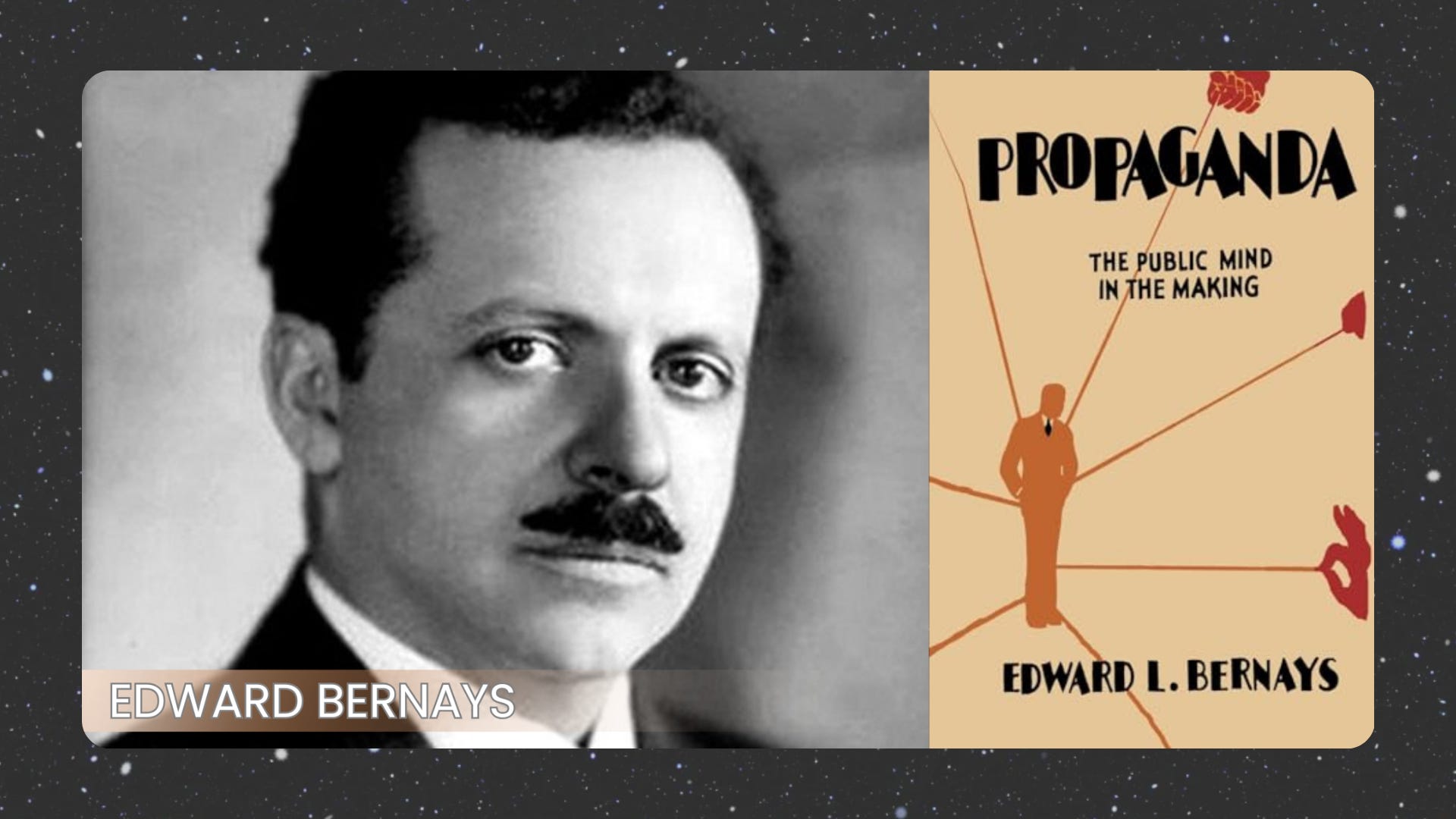
“The conscious and intelligent manipulation of the organized habits and opinions of the masses is an important element in democratic society. Those who manipulate this unseen mechanism of society constitute an invisible government which is the true ruling power of our country.”
What’s most striking is that this was not the warning of a dissident or a critic of this invisible government. Bernays was, at least in the 20th century, one of its primary architects. Known as the father of modern public relations, Bernays spent his career building the machinery he was describing. He worked for corporations, governments, and institutions to shape what the public believed, wanted, and feared. He advised presidents. He worked for the United Fruit Company when it needed public cover for a CIA-backed coup in Guatemala. On behalf of a pork industry client, he ran the campaign that convinced Americans that bacon and eggs was the definitive American breakfast.
Bernays understood, before almost anyone else in the twentieth century, that you didn’t need to control what people thought if you could control the conditions under which they formed their thoughts.
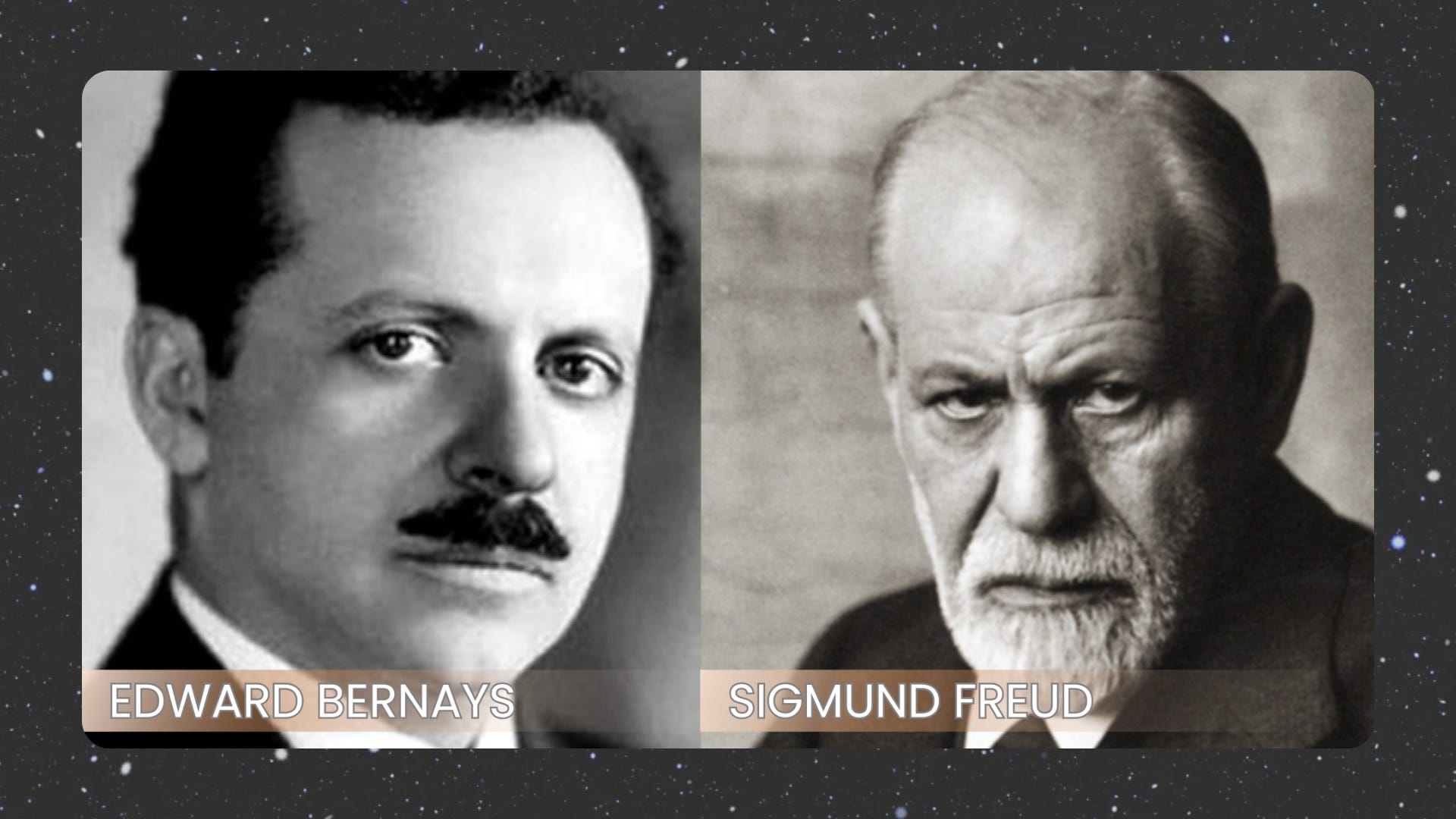
Bernays was the nephew of Sigmund Freud, the founder of psychoanalysis. And Bernays was explicit about the intellectual debt he owed his uncle. What Freud had demonstrated, Bernays argued, was that human beings are not primarily rational actors making conscious choices based on accurate information. Beneath the surface of every decision, every preference, every conviction, runs a deeper current of unconscious desire, fear, and instinct. People don’t know what drives them. And it was in that gap between what people believe motivates them and what actually does that Bernays did his best work.
He called it the “engineering of consent.” And it became the operating logic of the modern world.
Advertising, public relations, political consulting, crisis communications, brand strategy—every industry built to manage public perception descends from what Bernays articulated and systematized. The techniques and delivery mechanisms have grown more sophisticated, but the foundational premise has not changed. And that premise is this: the masses cannot be reasoned with directly, because reason is not what governs them. They must be managed through symbols, emotions, and the careful construction of desire.
The invisible government Bernays described in 1928 is still with us. If anything, it’s more pervasive in our world than it has ever been. Since Bernays wrote those words, this unseen control mechanism has been systematized, digitized, and built into algorithms. It has been scaled into the architecture of daily life.
If we want to understand the world this apparatus has produced—and more importantly, the world it was designed to protect—we have to go back further than Bernays. We have to go back to the ideas he inherited, and to a question that has been almost entirely erased from the history of those ideas: where did Freud’s psychoanalysis framework actually come from?
Because the theory of unconscious drives that Bernays applied to populations did not emerge from nowhere. It was constructed on top of something Freud had first discovered and then deliberately buried—a truth about what the powerful do to the vulnerable, and what happens when the vulnerable try to speak about it.
And I’m not being dramatic when I say that when you understand what that truth was, why it was suppressed, and how its suppression became the foundation upon which modern systems of control have been built—I promise you that you will never see the world the same way again.
Freudian Ick
Let me be honest about a particular bias of mine before we go further. I have always had a problem with Freud. And to be clear, this is not a sophisticated academic problem. It’s a far simpler and more visceral one.
I grew up with psychiatrist parents. Freud was furniture in our house. And even as a child, something about his ideas struck me as—not just wrong—but suspicious. Specifically, the theory that children harbor sexual desire for their parents and that the defining psychological drama of human development is the wish to possess one parent and destroy the other.
I’m sorry, but I simply don’t remember that part of childhood. And I don’t think it’s because I repressed it. To me, that has always sounded less like a profound insight into the human mind and more like a deranged confession from one very particular mind, projected outward onto everyone else with enormous confidence and institutional force. It’s quite Freudian, really.
In today’s episode I want to talk about the profound impact that Freud’s psychoanalytic theory has had on humanity and our relationship to reality. But to do that justice, I think we first need to explore where exactly it is that Freud’s ideas came from. Because, as you’ll see, it’s not at all the story that we have been told. And the gap that exists between those two stories is not the result of time, or scholarly disagreement, or the natural complexity of intellectual history. It’s the result of deliberate suppression by people who understood exactly what they were doing.
To understand the part of Freud’s history that was buried, we need to meet the man who dug it up.
Jeffrey Masson, Heretic
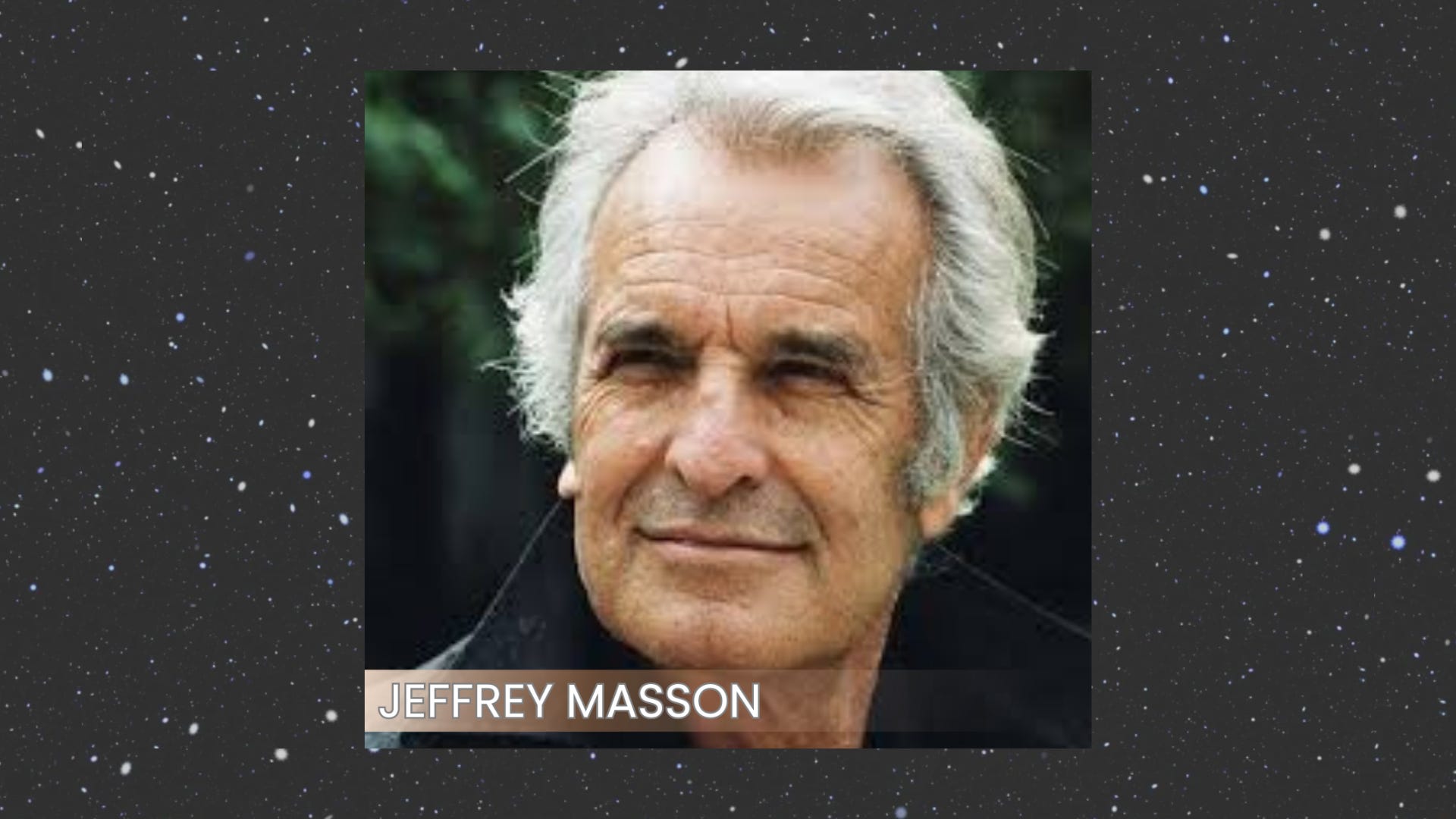
Jeffrey Masson was a psychoanalyst and Sanskrit scholar who, in the late 1970s, was appointed as the Projects Director of the Freud Archives. In this role, he was given access to Freud’s personal library, his private papers, and his complete correspondence with his closest friend and intellectual confidant, the Berlin physician Wilhelm Fliess. This correspondence, spanning the years during which Freud was formulating his foundational ideas, is easily the single most important collection of documents in the history of psychoanalysis.
Freud’s daughter Anna and the analyst Ernst Kris had published an edited version of this correspondence in 1950, presenting it as substantially complete. It was not.
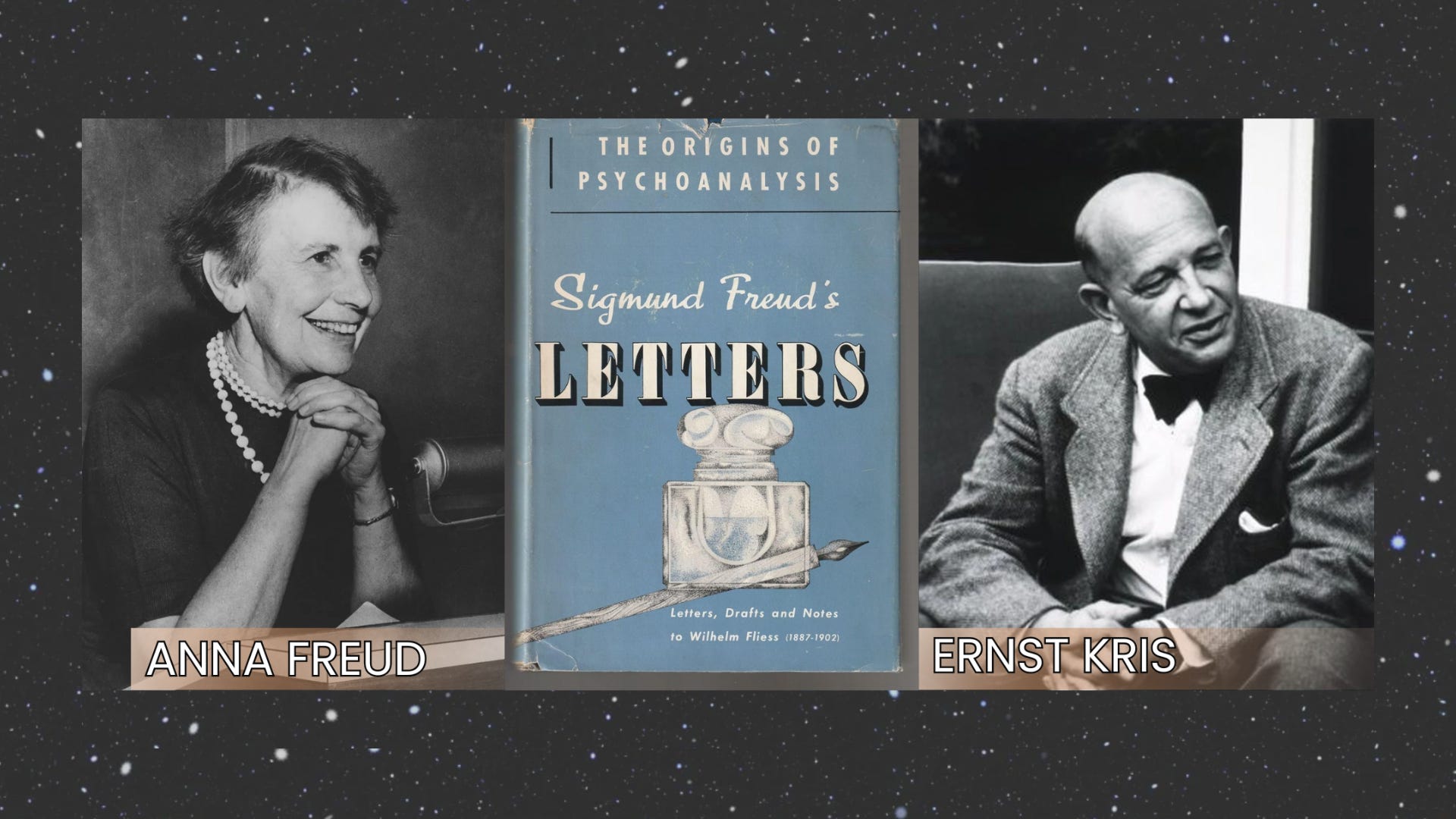
Masson was given access to the originals held at the Library of Congress, and what he found there was shocking. Entire letters had been omitted without notation, passages had been excised mid-paragraph, and significant case histories were systematically removed. And this pattern of erasure was concentrated with unmistakable consistency around a specific period and a specific set of ideas. All of this led him to the last conclusion that the psychoanalytic establishment wanted to hear.
Masson presented his preliminary findings in 1981 at the Hampstead Clinic in London, at Anna Freud’s own invitation, before an audience of leading analysts from around the world. The reception could only be called icy.
A series of articles in the New York Times that August reported on his research. The pressure that followed culminated in his removal from the Archives. The official reason given was his poor judgment demonstrated by speaking about his findings to a non-professional audience. Essentially, they didn’t like him telling the family secrets.
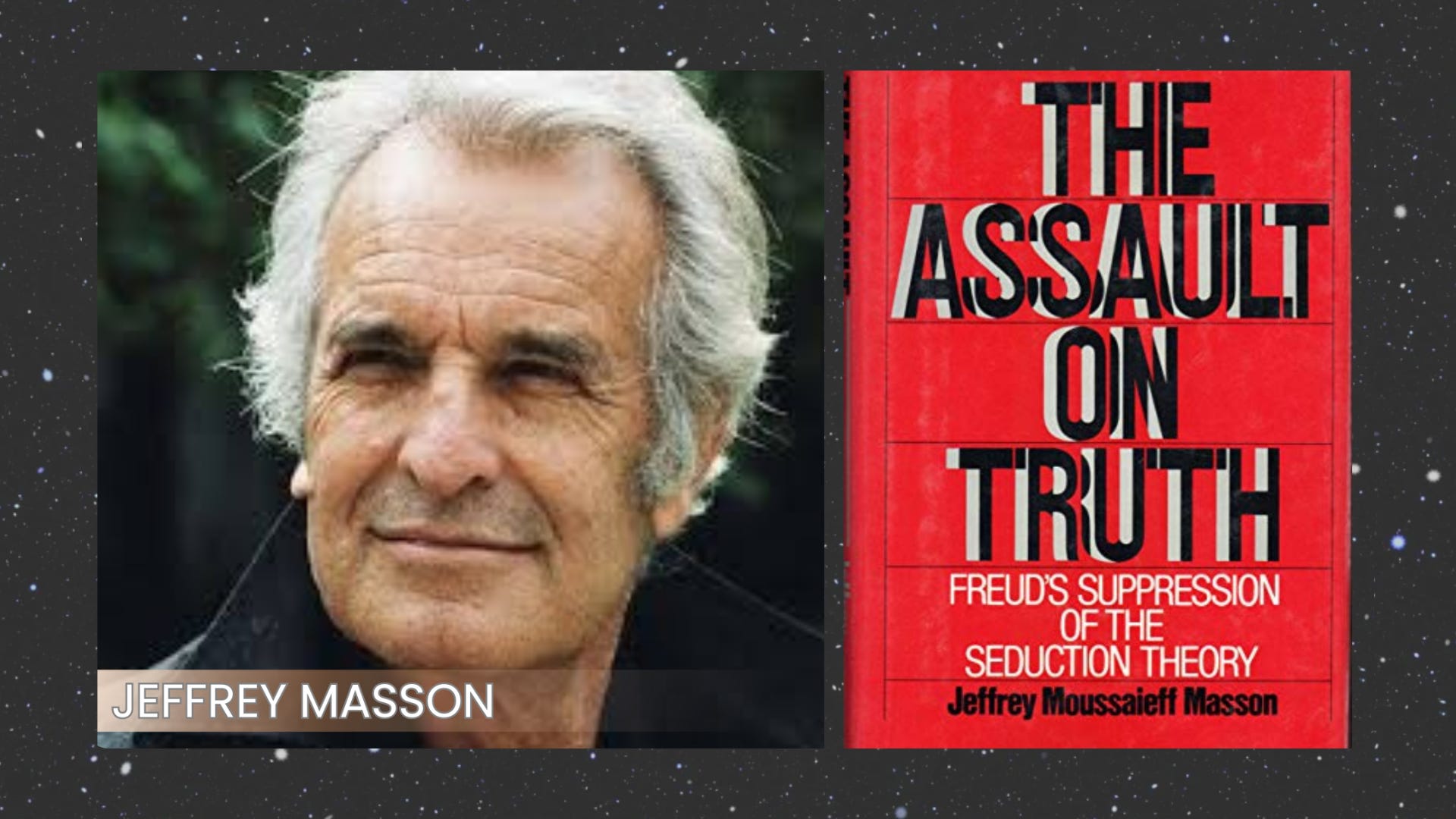
Masson published his findings in 1984 in a book called The Assault on Truth: Freud’s Suppression of the Seduction Theory. His academic career didn’t survive it. The psychoanalytic establishment’s response—fury, dismissal, and coordinated silence—bore an eerie resemblance to another reception in another room that we will get to shortly.
Because what Masson had revealed, written in Freud’s own hand, was nothing short of damning.
The Source of the Nile
Sigmund Freud was born in 1856 in what is now the Czech Republic, and by the time he established his practice in Vienna he was already a man of formidable intelligence and barely concealed ambition. He wanted to crack the problem of mental illness at its root—to build a science of interior life rigorous enough to stand alongside medicine.
He had studied under Jean-Martin Charcot in Paris, the most celebrated neurologist in Europe, and returned convinced that the key to hysteria lay somewhere in the patient’s past. At the time, “hysteria” was a catchall diagnosis applied almost exclusively to women, covering everything from unexplained paralysis to seizures to what we would now recognize as the aftermath of trauma. And Freud had a radical new idea that hysteria might be the result of something that actually happened to the woman, rather than it being just a consequence of her nerves or her blood or her heredity. Imagine.
What he had found, over the course of several years of clinical work in the early 1890s, was something the medical establishment of his era was entirely unprepared to receive. His patients—overwhelmingly women—were telling him, consistently, reluctantly, and with enormous distress, that they had been sexually violated as children. And their attackers weren’t strangers, but the trusted men of the household, usually their own fathers.
Freud found these confessions to be entirely credible based on the behavior of the women which he believed was too profound to be faked. They described their experiences with the full weight of bodily memory, the feelings that had been locked away returning alongside the words. Freud watched as their shame and terror surfaced in real time, and he listened. More remarkably for a physician of his era, he believed them.
He wasn’t working in a vacuum. During his 1885 study trip to Paris, Freud had attended the forensic autopsies and lectures of Paul Brouardel at the Paris morgue—sessions he later described as among the most significant of his education, where he saw things “of which science preferred to take no notice.”
What Masson uncovered was that Freud had also been exposed, in Paris and through his own library, to a substantial French medico-legal literature documenting the reality and frequency of child sexual abuse with clinical precision. There was a growing community of serious physicians who had examined thousands of cases and concluded that children, particularly girls, were sexually violated with alarming frequency, almost always by family members, and they almost never fabricated their accounts.
Freud owned their books. He underlined their names when he encountered them in other texts. Though he never cited them in his published work, what he had seen and read in Paris almost certainly played a role in his willingness and ability to take his patients’ accounts of abuse seriously.
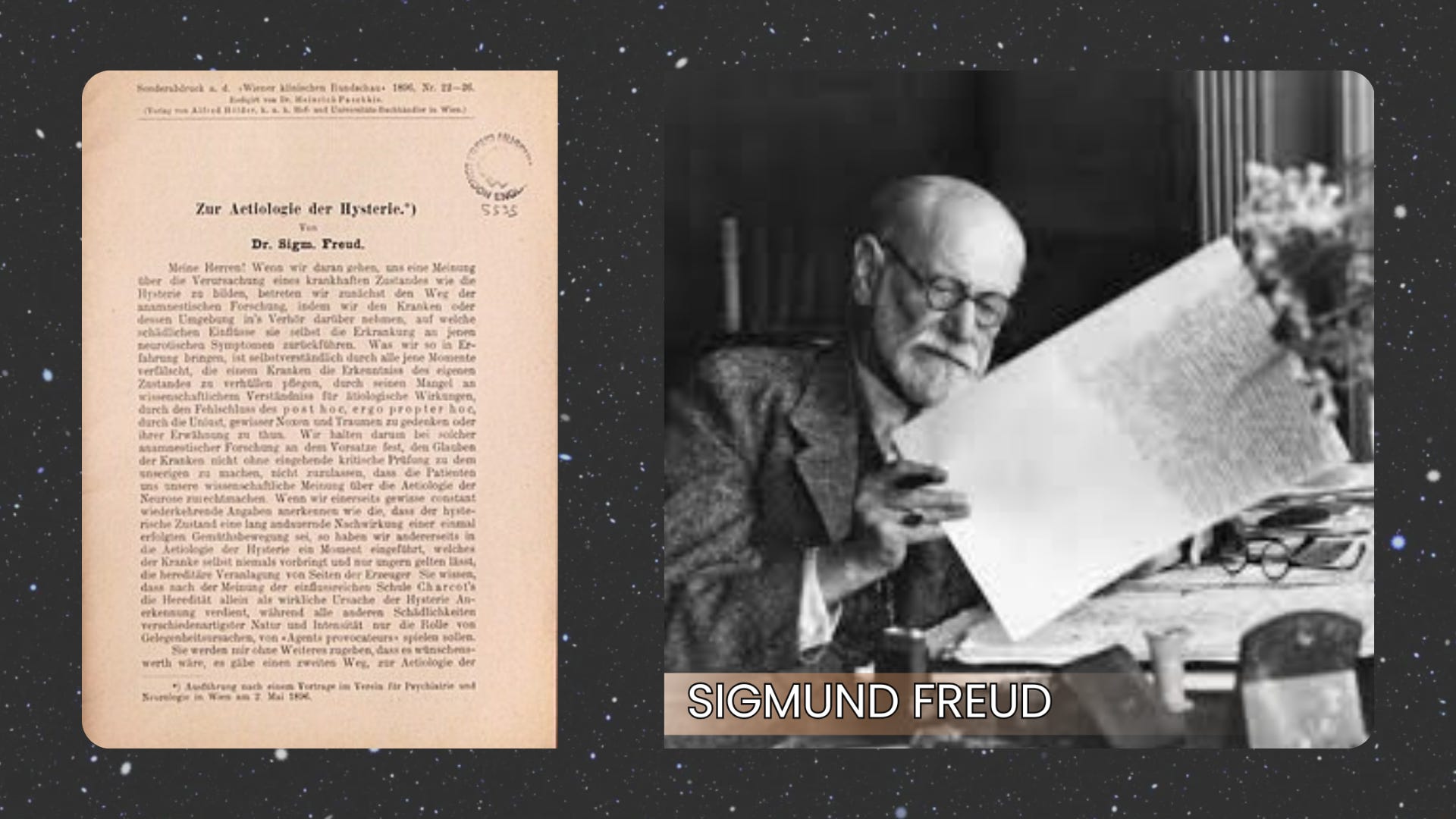
In April 1896, Freud stood before his colleagues at the Society for Psychiatry and Neurology in Vienna and presented a paper called “The Aetiology of Hysteria.” He told them that the origin of neurosis lay in real childhood sexual trauma—not fantasy, but actual violation committed by actual adults against actual children. He used words like rape, attack, assault. He described the perpetrators with precision: adults armed with complete authority over children too frightened to refuse and too dependent to seek redress. He believed, he wrote to Fliess afterward, that he had demonstrated the clear origin of a more than thousand-year-old problem. He called it “the source of the Nile.”
But, just as it would be decades later when Masson stood before his colleagues, the room was silent.
Afterwards, the eminent Richard von Krafft-Ebing, who chaired the meeting, offered the only response that made it into the record saying, “It sounds like a scientific fairy tale.”
No discussion followed. The journal reported the paper by title only—no summary, no engagement, not even the customary notation that it would be published. In a letter to Fliess five days later, Freud wrote: “A void is forming around me.” In a line omitted from the published edition of that letter, he added: “They can all go to hell.”
He defied them and published the paper anyway.
And yet, within a decade, he had reversed everything it contained.
A Passionate Friendship
But what could have possibly compelled Freud to reverse course after everything that he had seen and experienced?
To get to the root of that mystery you need to understand Wilhelm Fliess.
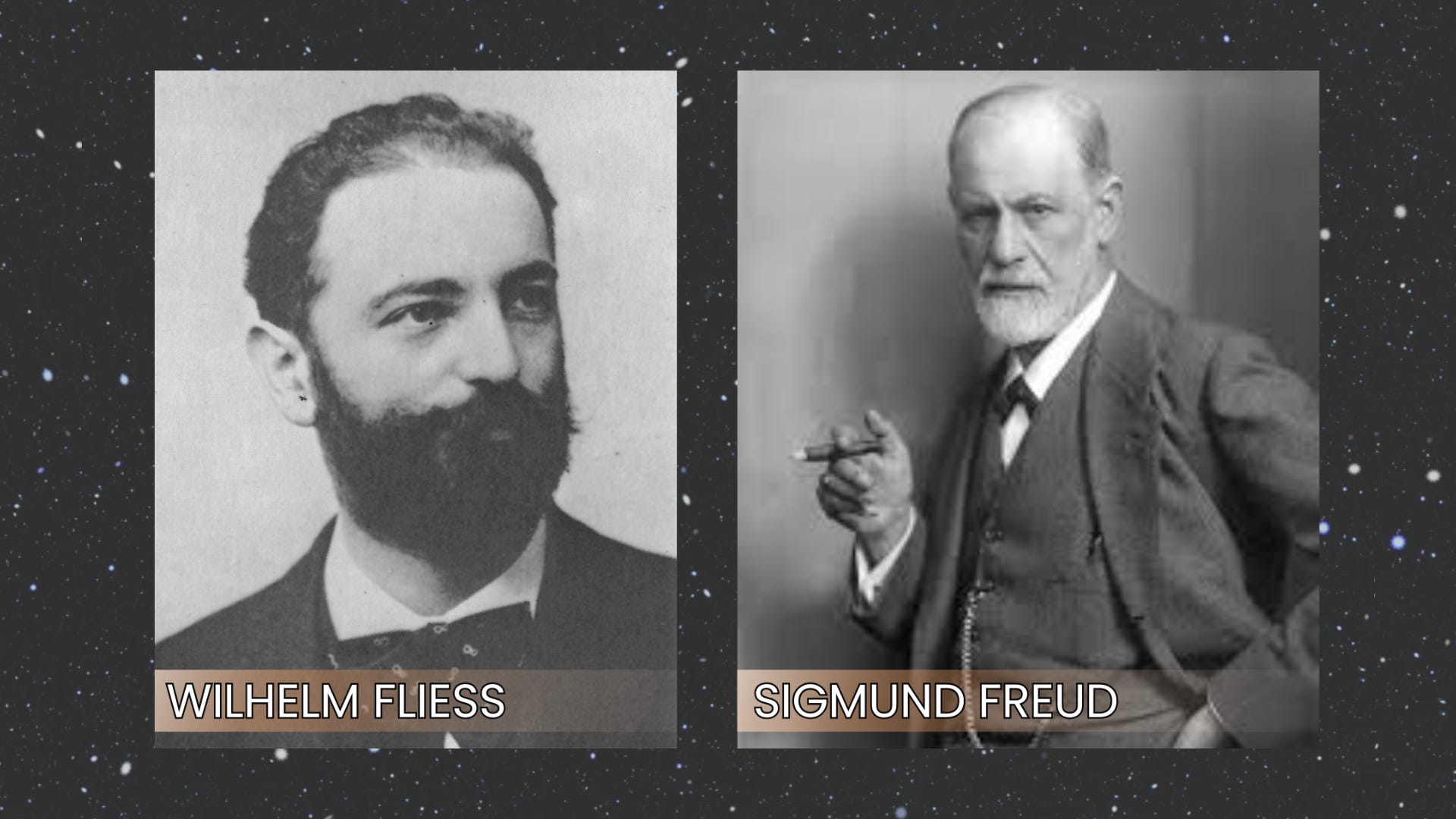
Fliess was a Berlin ear, nose, and throat physician whom Freud had met in 1887 and with whom he had developed what Ernest Jones, Freud’s authorized biographer, described as a “passionate friendship.” Whatever you take that to mean, it stands out as the most important relationship of Freud’s life.
For fifteen years Fliess was Freud’s closest intellectual confidant, the one person to whom Freud wrote with complete candor, the audience for whom he rehearsed his developing ideas, and the friend whose approval he sought with an intensity that bordered on dependency. When Freud was isolated from the Viennese medical establishment, when his colleagues were treating him as a crank, Fliess was his rock.
One thing the men shared was a certain professional ambition. Like Freud, Fliess had his own theories about the origin of neuroses. He believed that the nasal passages were intimately connected to the sexual organs, and that menstrual problems, neurosis, and masturbation were all linked through specific spots in the nasal tissue that he called genital spots. He believed that all significant events in human life—including illness, recovery, birth, death—were governed by mathematical cycles of 23 and 28 days. He believed he could predict the date of a person’s death. He had developed, in short, an elaborate pseudo-scientific framework that was fundamentally incompatible with Freud’s emerging psychological theories, though neither man seemed fully aware of this for years.
Fliess’s theories were, obviously, unfounded garbage. But what Fliess had that Freud desperately needed was certainty, enthusiasm, and unconditional belief in Freud’s genius. What Freud gave Fliess was the same. The relationship had the structure of a folie à deux dressed as an intellectual partnership. And at its center, in early 1895, stood a woman named Emma Eckstein.
The Stronger Sex
Emma Eckstein was one of Freud’s first analytic patients. She came from a prominent Viennese socialist family, was active in the women’s movement, and had come to Freud suffering from stomach ailments, menstrual irregularities, and difficulty walking. Freud had been treating her analytically and had come to believe, consistent with his developing seduction theory, that her symptoms had their roots in childhood sexual trauma. She was, by his own account, one of the most important cases of his early career.

As an aside—this is never confirmed in the text, but given what comes next—and given some of the more macabre details of the ritualized abuse being documented at the time that I haven’t gone into here—I think it’s important to note that given Emma’s likely history of childhood sexual trauma, it’s entirely possible that some of her medical issues like menstrual ailments and difficulty walking could have been the result of physical injuries she sustained from that abuse.
Fliess had a different diagnosis. In his expert opinion, Emma’s menstrual problems were caused by her masturbation, which had damaged the genital spots in her nasal tissue. The treatment was surgery. At Freud’s recommendation, Fliess came to Vienna in early 1895 and operated on Emma Eckstein’s nose.
When he left Vienna, he did so without realizing that he’d left half a meter of surgical gauze lodged inside her nasal cavity.
What followed was months of hemorrhaging and infection, as Emma teetered, at times, on the brink of death. Eventually, during one of her hemorrhaging crises, other surgeons were called in, and the gauze was finally discovered and removed. Freud described the scene in a letter to Fliess—the moment the gauze came out and blood flooded the room. He said he felt suddenly sick, fled to the next room, drank a bottle of water, and eventually had to be revived with cognac by another physician.
Emma Eckstein greeted him when he returned, pale and in agony, with the remark: “So this is the strong sex?”
She recovered, but her face was permanently disfigured.
A Little Sleight of Hand
It was at this point that Freud seemingly faced a choice. He could acknowledge what had actually happened: that he had referred his patient to an unqualified surgeon operating on pseudoscientific theory, that his closest friend had nearly killed her through negligence, and that the harm Emma Eckstein had suffered was real, external, and had two identifiable causes named Sigmund Freud and Wilhelm Fliess.
Or he could find another explanation.
The letters to Fliess document the pivot happening in real time, and what they reveal is profoundly disturbing. By April 1896—less than a year after the surgery—Freud was writing to Fliess that he could prove that Emma’s hemorrhages had been hysterical, that she had bled out of longing, and that the bleeding was an expression of her unconscious wish for Freud’s presence and attention.
By June he was describing her childhood nosebleeds as evidence that she had always been a bleeder and that her suffering was a feature of her complex interior life rather than a consequence of what two misguided doctors had done to her body. The external cause—the gauze and the unnecessary surgery performed based on a ridiculous theory—disappeared from the frame entirely. What remained, filling the space where accountability should have been, was Emma’s psychology. Emma’s fantasy. Emma’s desire.
She wasn’t hemorrhaging because she had been harmed. She had hemorrhaged because she was expressing herself.
In order to protect Fliess and himself from the practical and moral consequences of what they had done to Emma Eckstein, Freud needed a theoretical framework in which the cause of a woman’s suffering could be reliably located inside her own psyche rather than in the external world. The move that exculpated his friend required, as its logical extension, that the testimony of his patients be reclassified as wish rather than memory. His patients became collateral damage in his effort to hide his own guilt—especially, it seems, from himself.
And so, consciously or unconsciously, Freud flipped.
The Oedipus Complex and The Nucleus of Neuroses
It’s extremely important to note that the theory that replaced the seduction theory did not emerge as the slow, obvious culmination of Freud’s earlier work. It appeared, instead, as a sudden rupture.

In the book Sigmund Freud and the Jewish Mystical Tradition, author David Bakan argues that the sudden emergence of Freud’s psychoanalytic framework is one of the central puzzles of Freud’s intellectual biography. Before psychoanalysis, Freud had been a neurologist and medical researcher working within the recognizable scientific frameworks of his time. Afterward, he was building something much stranger and far more ambitious: a total interpretive system that claimed to explain dreams, symptoms, sexuality, religion, culture, family life, civilization, and the hidden structure of the self.
Even people close to Freud struggled to understand how one had become the other. As David Bakan notes, Freud’s contemporaries did not experience this transition as a smooth development. To them, the Freud of psychoanalysis seemed almost disconnected from the Freud they had known before. They could see no obvious bridge between his earlier medical research and the new world of symbols, fantasies, wishes, dreams, and unconscious meaning into which he had suddenly disappeared.
So the question becomes: where did psychoanalysis actually come from?
The official story tends to present it as an eruption of individual genius, as though Freud had simply gone down into the depths of his own mind and returned with the hidden grammar of the human psyche. But movements of this scale almost never emerge from one person alone. A theory this comprehensive, touching medicine, philosophy, sexuality, religion, myth, interpretation, and the nature of reality itself, does not spring fully formed from a single brain. It has roots. It has precedents. It carries forward older arguments, older symbolic systems, older methods of reading concealed meaning beneath the surface of things.
Psychoanalysis was no exception.
Its roots ran through Charcot’s clinic, Breuer’s patients, nineteenth-century theories of the unconscious, older medical debates about hysteria and sexuality, and, as Bakan very convincingly argues, Jewish mystical and interpretive traditions that Freud secularized—whether consciously or unconsciously—without fully acknowledging he’d done so. In other words, psychoanalysis did have antecedents. The problem is that the public mythology of psychoanalysis often obscures them, presenting Freud less as a man working within a dense field of inherited ideas than as a solitary genius who discovered the unconscious almost by force of will.
Freud’s own explanations only further complicate the problem. At different points, he credited different people with giving him the crucial insight that sexuality lay at the root of neurosis. Sometimes it was Breuer. Sometimes it was Charcot. Sometimes it was a gynecologist named Chrobak. But Bakan argues that these accounts are difficult to take at face value. They shift too much and arrive too conveniently. They often seem less like stable memories than attempts by Freud to explain where his ideas came from after the fact.
Bakan’s point is not that Freud simply lied. It is subtler than that, and more Freudian. Freud’s own origin story has the character of what he himself called a “screen memory”: a memory that may contain some truth, but which has been arranged in such a way that it conceals the more disturbing truth beneath it.
Which is to say, Freud’s story about the origins of psychoanalysis may itself need to be psychoanalyzed. And, to be honest, we absolutely should be psychoanalysing it. Because it’s more than a little suspect.
The theory that Freud flipped to, the theory upon which his future work would be built—the theory he suddenly created after years of going to war with his colleagues over his belief that childhood sexual abuse was real—was the idea that children are sexually attracted to their parents and that memories of abuse are an expression of that repressed desire.
The brazenness of that move, stripped of its usual academic buffering, is genuinely shocking, and it should be. As is the profound influence this idea has had on our modern society. I think we all should have been and should be far more scandalized. The fact that this idea was spoonfed into our culture under the guise of genuine scientific insight with all the backing of the academic elite should horrify us.
Because what this meant was that the women who had told Freud, consistently and with enormous distress, that they had been sexually violated as children by the trusted men of their lives hadn’t actually been violated. In fact, their memory of violation was an expression of repressed desire for the person they claimed had harmed them.
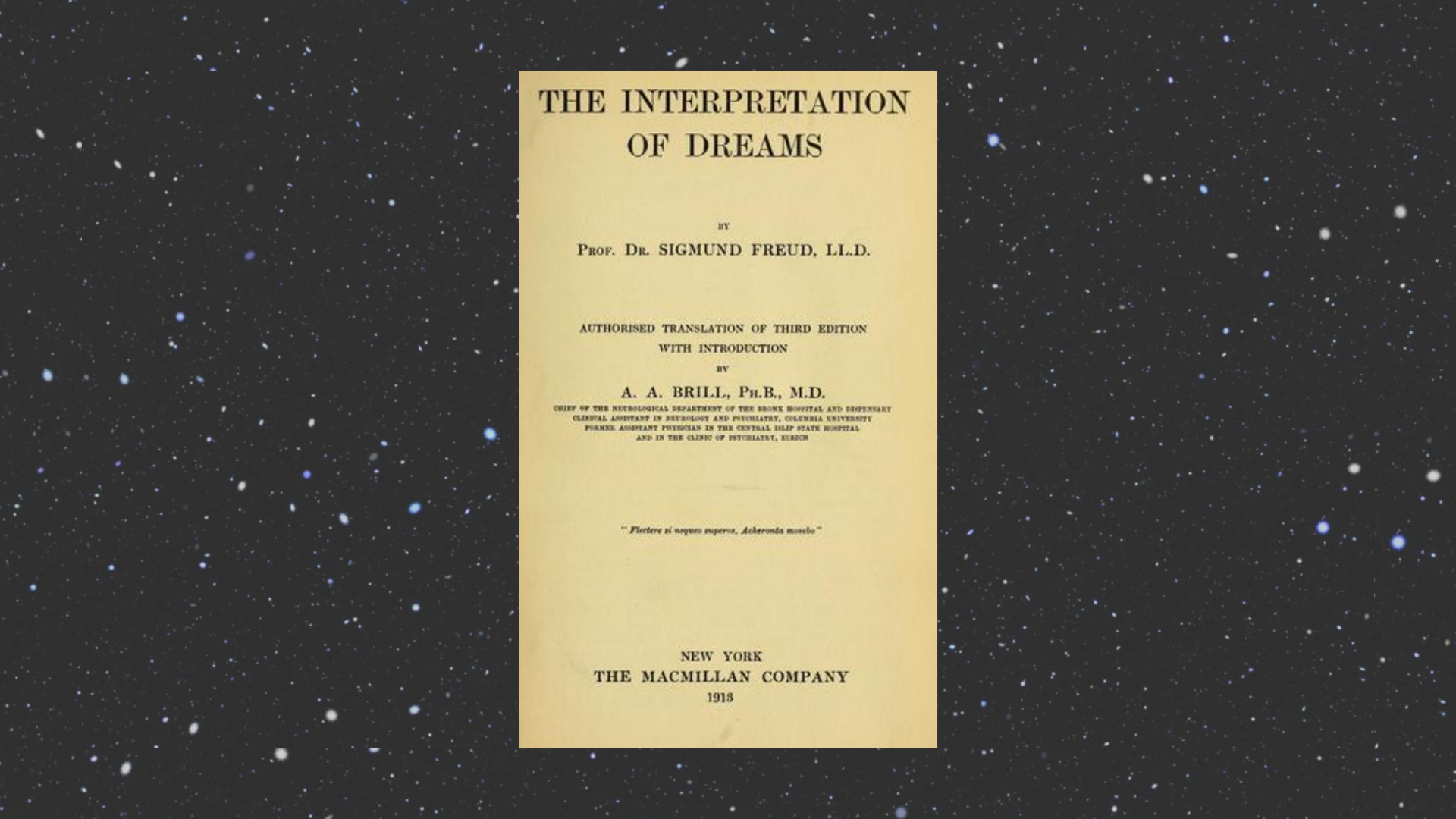
Freud published the first version of this argument in 1900 in The Interpretation of Dreams, and fleshed it out more fully in the following years. The Oedipus complex, as he formalized it, held that the central psychological drama of human development is the child’s erotic desire for the opposite-sex parent resulting in a murderous rivalry with the same-sex parent.
And it’s important to note that this is not a marginal feature of the theory. It is the engine. It is the thing that makes neurosis make sense within the new framework, the thing that gives the unconscious its content and repression its mechanism and the entire psychoanalytic enterprise its explanatory power. Without the child’s desire as the motor of psychological development, the framework never gets off the ground.
Granted, it’s a complex topic. There’s a lot of nuance here. And I will concede that arguments that the Oedipus complex isn’t particularly important or structural to psychoanalysis have some merit. But we can’t note that without also noting that they contradict Freud’s own stated belief that the Oedipus complex was the “nucleus of neurosis.”
So to recap:
In 1896, Freud stood before his colleagues and told them that the women in his consulting room had been violated by their fathers. He believed them. He had evidence. He had clinical documentation. He had the corroborating testimony of a substantial French medico-legal literature that had been examining exactly this phenomenon for decades. He believed that childhood sexual trauma was “the source of the Nile” when it came to adult neuroses.
In 1905, he published Three Essays on the Theory of Sexuality, in which the sexuality of children—their desires, their wishes, their erotic investments in the bodies of their caregivers—is the foundational premise of psychological development.
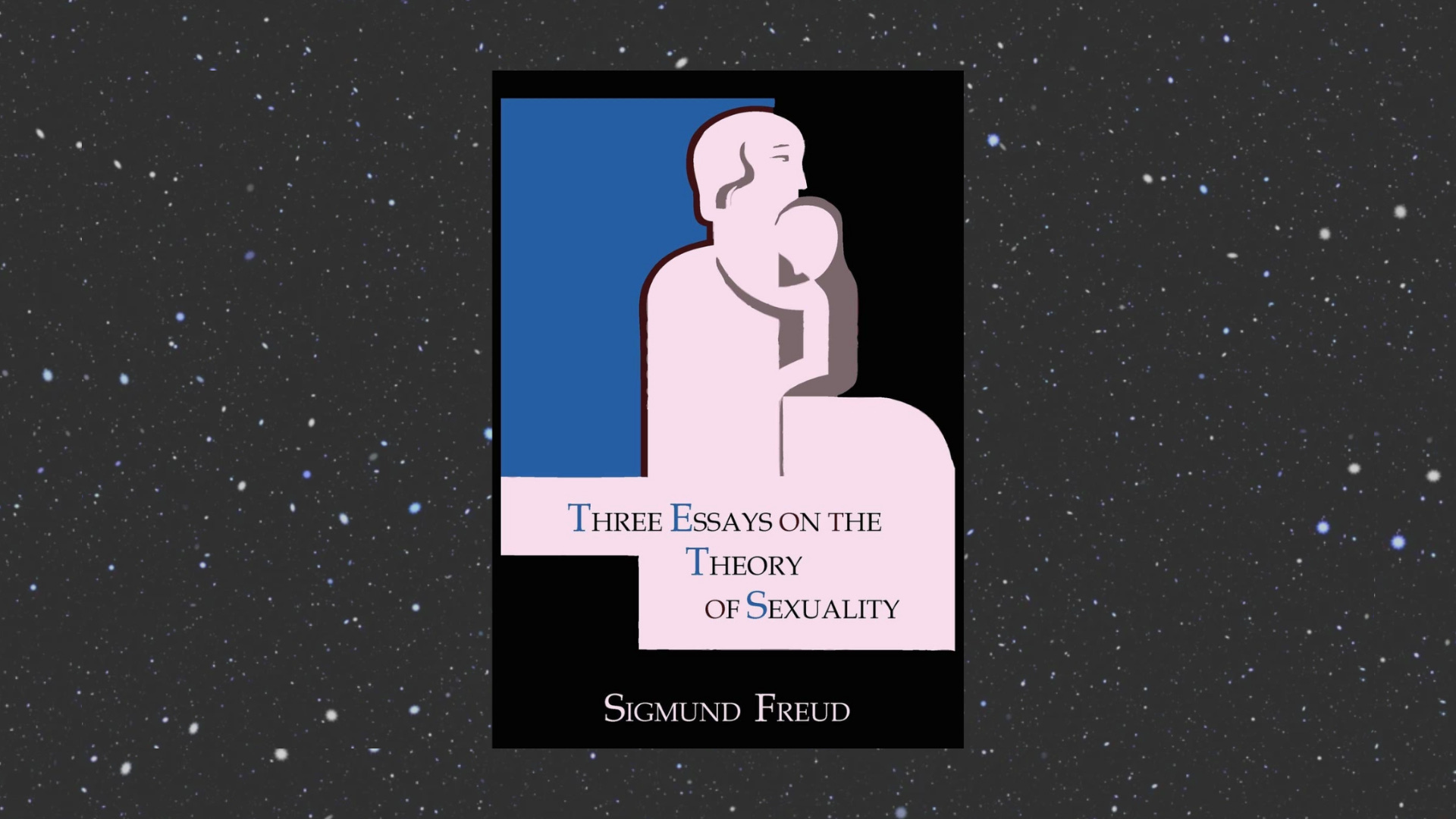
The inversion is total. The predatory adult has been replaced by the desiring child. The testimony of the victim has been replaced by the fantasy of the patient. The external world—with its real perpetrators, its real violence, its real adults armed with complete authority over children too frightened to refuse—has been replaced by the interior world: a seething landscape of unconscious wish, primal jealousy, and erotic longing that the child cannot acknowledge and must spend the rest of their life managing.
The parents did not assault the children. The children desired the parents. And their neuroses—all of it, the paralysis, the seizures, the dissociation, the nightmares, the suffering that had filled Freud’s consulting room for years—was simply the psychological expression of them repressing that desire.
And as I’m going to argue, this is the framework that conquered the twentieth century.
The Baby and the Bathwater
I want to be careful here, because it would be easy to take this argument too far. It would be easy to claim that Freud is a mere fraud and his frameworks are without merit. This story is far more complex than that.
I’d argue that the theory of the unconscious has genuine explanatory power. Repression is real. The recognition that early experience shapes adult psychology is an important one. And Freud’s contribution to our understanding of those mechanisms—however contaminated its origins—is not nothing. Sophisticated contemporary trauma research has validated the basic observation that the body holds what the mind cannot bear to know, that memory is not a recording but a reconstruction, and that early relational experience leaves imprints on the nervous system in ways that persist long past the events that caused them.
There is clearly value there. None of that is what I am arguing against.
What I am arguing is that the specific move made by Freud—the relocation of the cause of harm from the external world into the interior life of the sufferer—was not a scientific conclusion. It was a defensive maneuver. It was born of a truth in his own life that he could not integrate, so it had to be dressed up in a convenient fantasy and repressed.
My issue with Freud has always been that he’s so Freudian.
Trust The Experts
I’m going to piss some people off now by saying some things that are deeply culturally unpopular. I think it’s important to say them anyway.
The emergence of psychoanalysis changed the world in countless ways—both intentional and unintentional, both positive and negative. But one of the most significant of them was this:
It created a professional infrastructure of new experts whose primary function was to stand between people and their own experience and tell them what it meant. The psychoanalyst, and later the therapist, and later the entire ecosystem of mental health practitioners that the theory spawned—these became the authorized interpreters of interior life.
And none of this is to suggest that people don’t genuinely need help understanding themselves. People do need help. Human psychology is genuinely complex and having professional support for navigating one’s life can be genuinely valuable. I’m not aiming my cruise missiles at the entire psychological enterprise.
What I’m pointing to here is something bigger and more subtle. I’m not talking about what the field of psychology is or even what it does. I’m talking about what it birthed into the zeitgeist. I’m talking about the gradual cultural reframing of one’s relationship to their own inner world that has resulted from the growing emphasis on psychology and mental health in our society.
The specific epistemological premise embedded in the therapeutic relationship, drawn directly from Freud’s framework, is that the patient’s own account of their experience is the starting point of an investigation, not the conclusion of one. You tell the therapist what has happened to you. Then the therapist helps you discover what really happened. Your perceptions are raw material. The interpretation is the product. And the interpretation requires an expert to produce.
Not just anyone can tell you what really happened to you, least of all you.
The message that seeped into the culture from this without anyone seeming to notice was that you can’t trust yourself without authorization. You can’t actually know what happened to you for sure. You can’t know what you feel or why. You can’t know whether your anger is proportionate or displaced, whether your grief is appropriate or pathological, whether your sense that something wrong was done to you reflects reality or simply your own distorted perception of it. You need someone to tell you. And until someone tells you, the responsible, self-aware, psychologically sophisticated position is to remain skeptical of your own account.
And listen, once again, there is obvious value in having the ability and the willingness to be skeptical of your own perceptions. That is, after all, the primary thesis of this podcast. That’s not what I’m arguing against. I’m just saying that we also have to recognize that a framework that causes an entire population to perpetually hold their own beliefs in suspicion is extraordinarily useful if you are someone who needs people’s accounts of what was done to them to remain murky and unclear.
Watch how it works when institutions face accusations of harm. A person says: something was done to me. An institution responds: we take this very seriously and are committed to a thorough process.
What the thorough process does, reliably, is install the same epistemological framework Freud built to protect himself from Emma Eckstein. The person’s account is treated as raw material—sincere, perhaps, but necessarily incomplete, necessarily filtered through a subjective perspective that cannot be fully trusted. Trained professionals will examine it, a fair and objective assessment will be conducted, and then the institution will determine what actually happened. And what the institution determines has consistently, across decades of documented cases, tended to locate the cause of the problem in everything except the institutional behavior that produced it. They find some way to locate it in the accuser’s history, their motivations, or their psychological profile. The experts manufacture the context that explains why the person might have perceived things this way. They’ll write official reports on the ways in which their account, however sincerely held, does not fully correspond to the facts as they can be objectively established.
The external cause disappears from the frame. What fills the space is the interior life of the person making the claim.
With enough psychoanalysis, anyone’s hemorrhages can become hysterical.
Therapy World
And then there is what all of this did to everyone else—not just to the people trying to report harm, but to the ordinary experience of being a person in a culture that has absorbed the premise of psychoanalysis so completely that it no longer recognizes it as a premise.
We live now inside a therapeutic framework so total that we can no longer see its edges. And within this framework, the vocabulary of self-examination has replaced the vocabulary of accountability. We speak of processing and unpacking and holding space for things. We speak of our triggers and our wounds and our nervous systems and our attachment styles. We speak of healing—a medical metaphor which positions suffering as a condition inside the individual to be addressed with remedies rather than as an ongoing and natural response to actual conditions in the world. The question we have learned to ask, confronted with distress, is not what happened to you but what is happening inside you.
And once again, this isn’t entirely wrong. That’s what’s so insidious about all of this. These ideas have been so influential because there is a real utility to them when applied with discernment. Trying to be aware of what is happening inside you and what unconscious motivations might be driving your actions is undeniably valuable—as is taking personal responsibility instead of always looking for someone else to hold the blame.
Again, my intention isn’t to villainize therapy. I’m just pointing out that our culture has placed the emphasis so heavily on the interior of the person that the exterior has become almost beside the point. Your suffering is a medicalized event. It has a clinical name. It can be treated. There’s a pill for that.
But the world that produced this many miserable people—the structures, the power arrangements, the identifiable people and institutions who made specific choices that had specific consequences—that’s just background noise. The thing to focus on is your healing. The thing to focus on is your interior landscape and your inner child and what it needs and how to give it that.
The people doing harm aren’t in the room, and there’s too many of them anyway. They wouldn’t fit. You can’t concern yourself with all that. All that’s in the room is you, and your therapist, and the project of making you well enough to function inside a world that is mentally and spiritually breaking so many of its inhabitants. No one can say why exactly. Take your medicine.
Freud did this first to protect himself and a friend from the consequences of performing a botched surgery based on egregious pseudoscientific quackery. The botched surgery destroyed a woman’s nasal passages, disfigured her face, and almost cost her her life.
That reality is the rot in the foundation. And the implications of its spread across a century of institutional adoption and cultural saturation is something I think we have not yet fully named—partly because naming it requires the kind of trust in our own perception that this very framework was designed to make us doubt.
You Can’t Do Anything With This Information
I want to return to Bernays and the declaration that he made in his 1928 book Propaganda:
“The conscious and intelligent manipulation of the organized habits and opinions of the masses is an important element in democratic society. Those who manipulate this unseen mechanism of society constitute an invisible government which is the true ruling power of our country.”
What he’s saying here is kind of breathtaking when you really break it down.
First he’s saying that manipulating the masses is how democracy works—and there is a lot packed into that idea. After all, democracy would seem to be the ideal system of governance, provided that the populace was rational. The fact that they must be herded and controlled for democracy to work assumes that the populace is irrational.
The further implication here, of course, is that democracy isn’t actually real insofar as we imagine it to be an expression of the will of the people. What democracy actually is is the mechanism by which the ruling class express their will through the populace in a way that makes them feel like it was their idea in the first place—not because they particularly care how we feel, but because it’s just easier that way.
He goes on to explain that the people who manipulate this unseen mechanism of society are the true ruling power, once again reinforcing the idea that democracy is mostly a charade meant to distract the masses from the forces that actually run the world.
What is remarkable about this passage is not that Bernays said it. What is remarkable is that he was entirely unconcerned about saying it out in the open. He published it in a book with his name on it, a book that was enormously popular and available to anyone. And he spent the next sixty years being celebrated for it.
It begs the question: why was he so comfortable?
The answer, I think, lies in the actual argument of Propaganda—not the famous opening line, but the premise underneath it, the one that made him confident that the whole ruse could be described aloud without consequence.
The premise is this: you can’t do anything with this information, because you are not the kind of creature who can.
People, in Bernays’s framework, are not primarily rational actors. They are driven by unconscious desires, instinctual fears, and emotional reflexes that operate beneath the threshold of conscious awareness. Their stated values and beliefs are mere rationalizations. Their convictions are animalistic responses to stimuli they are not equipped to identify. They believe they are making choices, but what they are actually doing is responding to conditions. And doing so with such precision and predictability that if you can sufficiently control the conditions, you can control the person.
And so, for their own good, those conditions need to be carefully engineered to produce specific responses. The invisible government doesn’t fight against human nature. It works with human nature, on behalf of civilization. Because human nature, left unmanaged, is dangerous.
And we wouldn’t want anyone to get hurt, would we?
The Torches of Freedom
In March 1929, Bernays was hired by the American Tobacco Company to solve a problem. The president of the company, George Washington Hill, had put it simply: women were already smoking indoors, and if he could get them smoking outdoors, he would double the female market overnight. The obstacle was a genuine social taboo. Women who smoked in public were considered disreputable. In 1908, a woman had been arrested in New York City for having a cigarette on the street.

Bernays consulted a psychoanalyst—his uncle’s colleague A.A. Brill—who helped him conceptualize a campaign. What they came up with changed the world.
Brill proposed that cigarettes were equated symbolically with male power, and, as such, could be reframed as instruments of feminist liberation. (I’ll let you decide which symbol of male power you think the cigarette was supposed to represent.) Through this lens, smoking in public was not a vice. It was a “torch of freedom.”
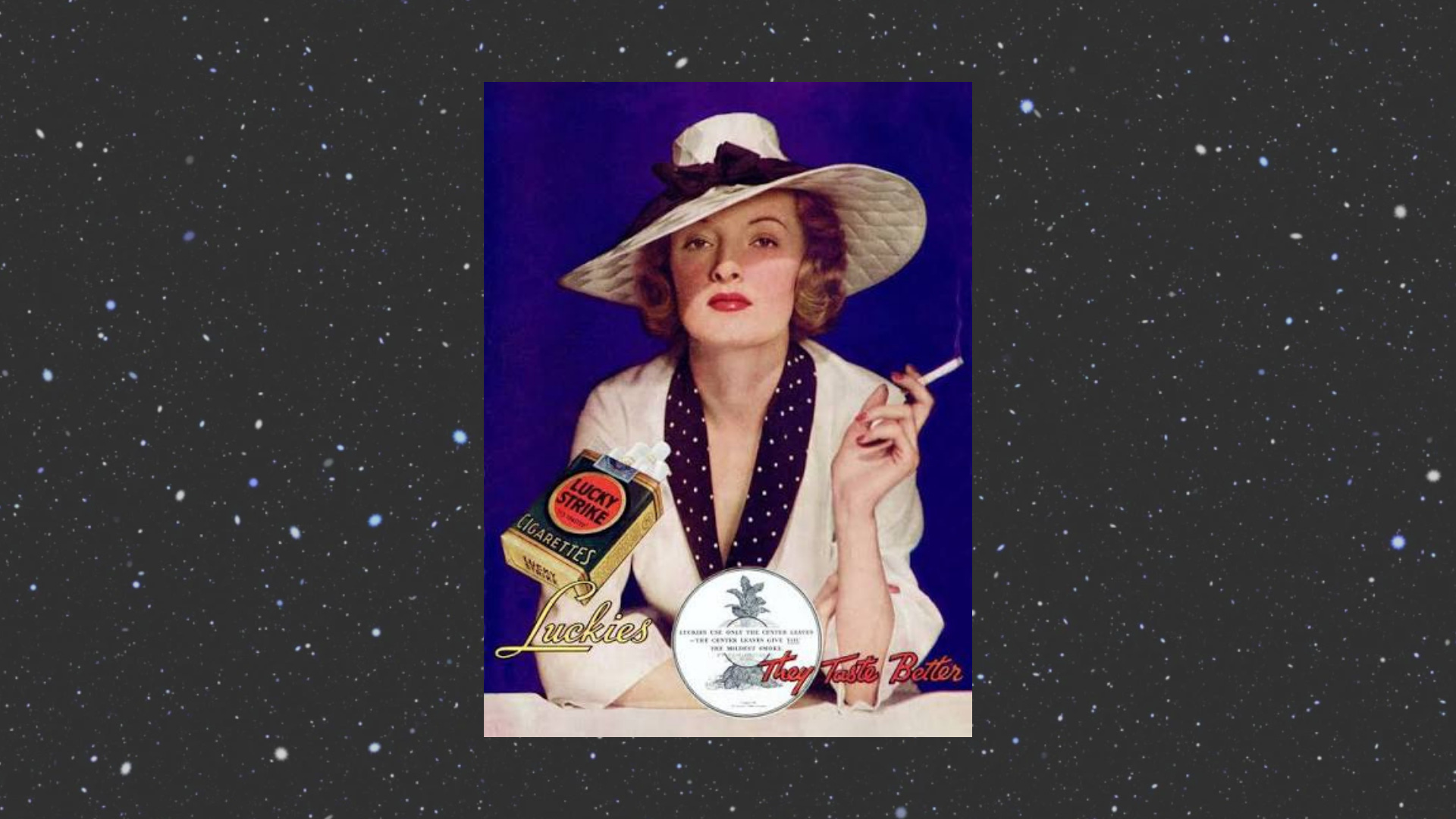
Bernays then instructed his own secretary, Bertha Hunt, to pose as a women’s rights advocate. She sent telegrams to carefully selected debutantes recruiting them for a “feminist ‘torches of freedom’ campaign.” He arranged for photographers and journalists to be present at the 1929 Easter Sunday parade on Fifth Avenue, tipped off by a middleman so that the coverage would appear spontaneous.
The women who marched that day genuinely believed themselves to be marching for their liberation. The New York Times ran the story with the headline “Group of Girls Puff at Cigarettes as a Gesture of ‘Freedom.’” Neither Bernays nor American Tobacco appeared by name in any of the press coverage. Bernays knew that the best kind of ad is the one you don’t have to pay for and that doesn’t look like an ad at all.
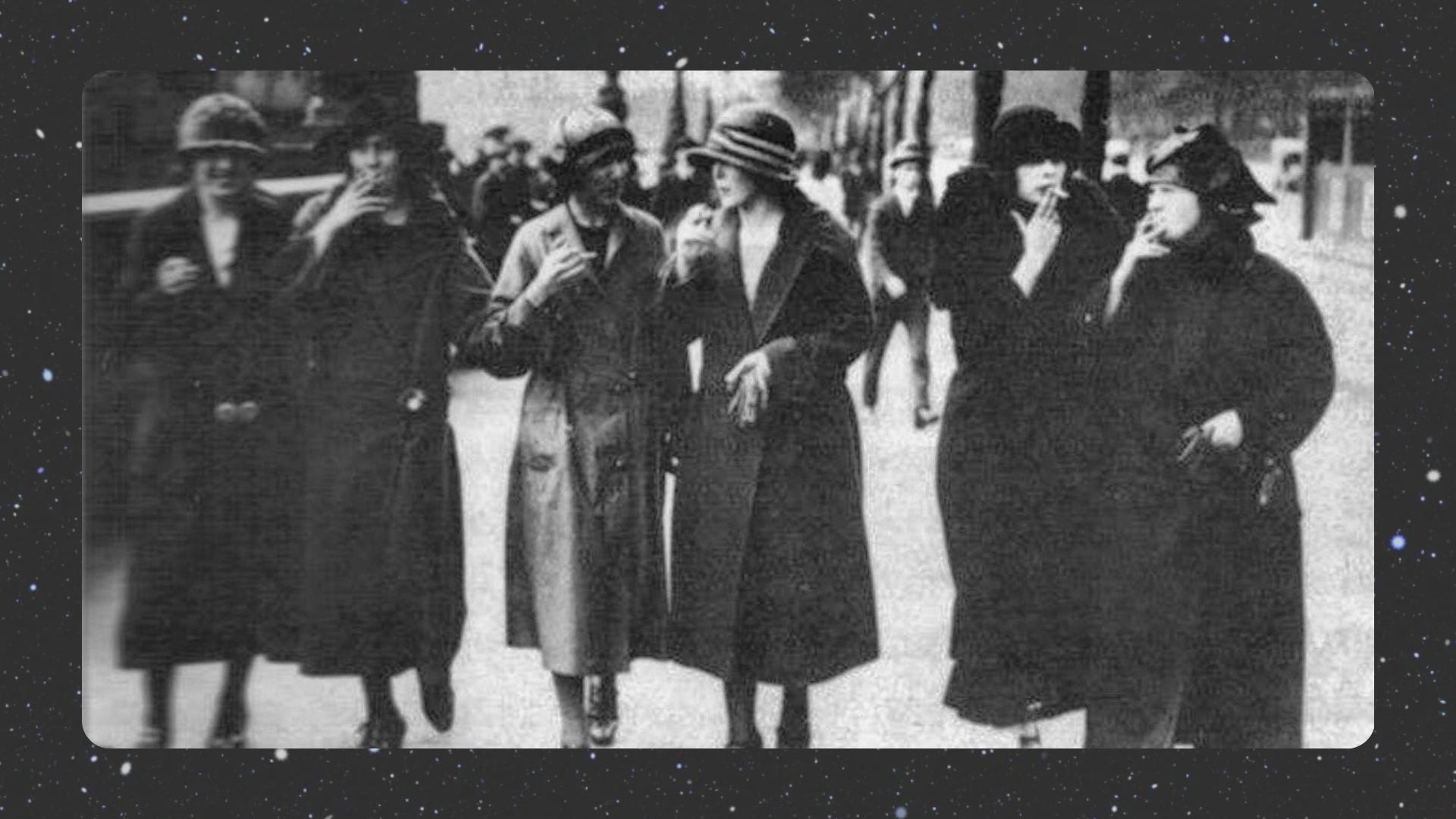
That was April 1st. Within six weeks, Broadway theaters had opened their smoking rooms to women. Within a decade, the campaign had helped normalize a habit that would go on to kill millions of the women it had recruited in the name of their own liberation.
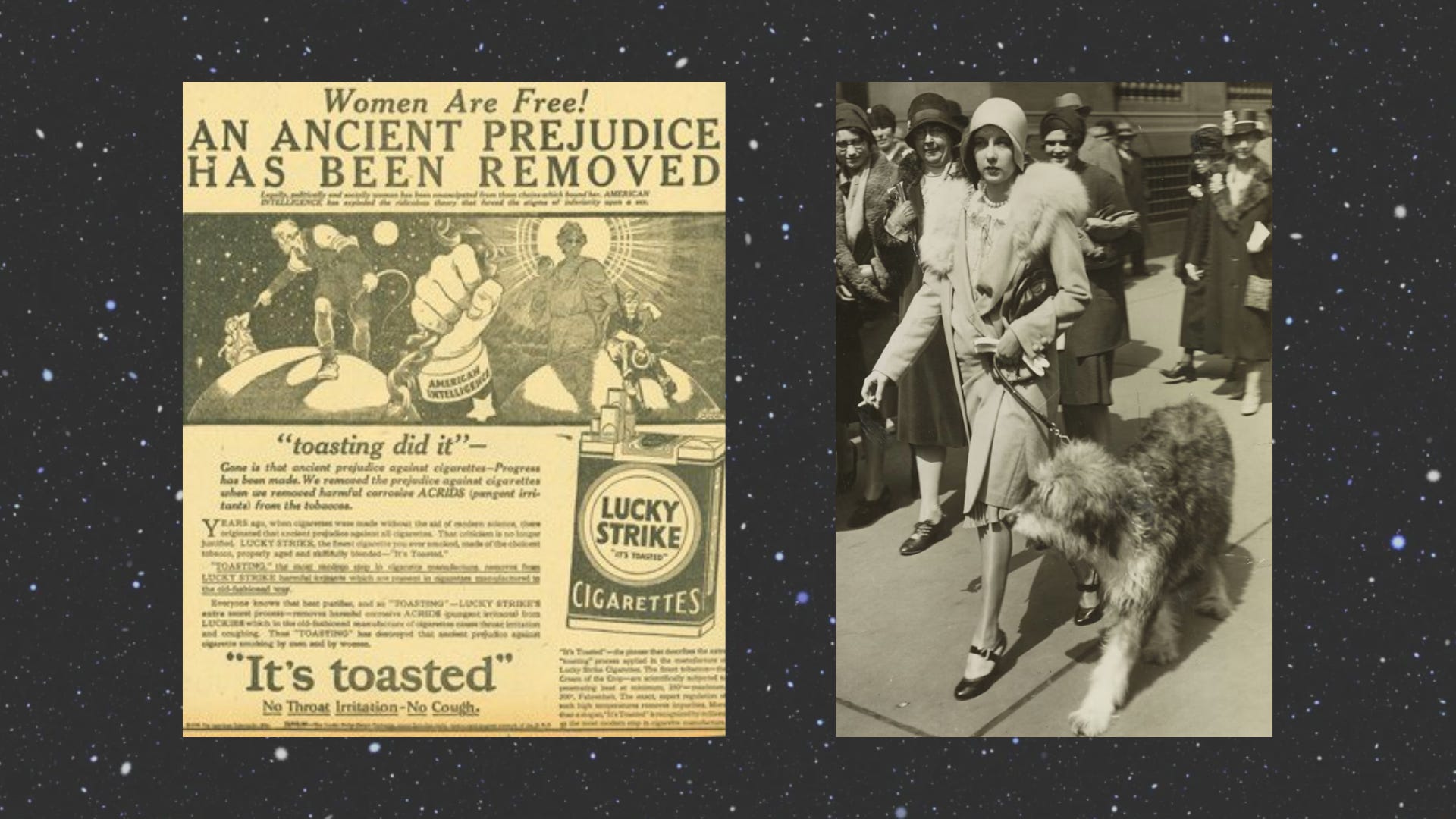
Bernays later said that the campaign had taught him that “age-old customs could be broken down by a dramatic appeal.” In this case, a real grievance existed. Women were genuinely subject to a social double standard and their behavior in public was policed in ways that men’s was not. Bernays didn’t need to invent their discontent. He only needed to identify it and harness it. And with a little sleight of hand, the harm being done by the tobacco companies was laundered by the heartfelt longings and ideals of the very people it was harming.
The Coup
By the early 1950s, Bernays had a different client with a different problem, and the same technique was about to be applied at a scale that makes the cigarette campaign look modest.
The United Fruit Company had operated in Guatemala for decades under arrangements made with a succession of American-backed dictators which included things like preferential tax treatment, vast land holdings, and near-total control of the country’s railroads and ports. In 1951, the democratically elected president Jacobo Árbenz began implementing land reform—redistributing uncultivated holdings from large plantations to the landless poor. Between 1952 and 1954, his government transferred approximately 1.5 million acres to one hundred thousand families. A portion of that land belonged to United Fruit.
United Fruit hired Bernays.
What followed was a multi-year propaganda campaign whose explicit goal was to make the material reality of the situation disappear and replace it with a different story entirely. The land reform—which had two identifiable causes, corporate land theft and American imperial interest in maintaining it—had to be removed from the frame.

What Bernays put in its place was a story about the Guatemalan government’s interior state. Stories were circulated about its hidden communist allegiances and its secret coordination with Moscow. It was framed for the public as a sinister ideological contamination spreading like an infection toward the American border.
Bernays built a network of intelligence contacts in Central America who fed selected information to journalists on what he called his “confidential list.” He produced a film. Its title was Why the Kremlin Hates Bananas. Suddenly the public narrative was no longer “why United Fruit has extracted the labor of the Guatemalan poor for fifty years,” but “why the Kremlin, with its mysterious and threatening designs, had taken an interest in a fruit company’s land dispute”.
The campaign worked. The incoming Eisenhower administration—whose Secretary of State had previously served as United Fruit’s attorney, and whose CIA director held personal financial ties to the company—authorized a covert operation to topple Árbenz that included the CIA setting up fake radio stations to broadcast disinformation across the country.
On June 27, 1954, Árbenz resigned. The military dictatorship that replaced him reversed the land reforms, returned United Fruit’s holdings, and inaugurated a civil war that lasted thirty-six years and killed approximately 200,000 people.
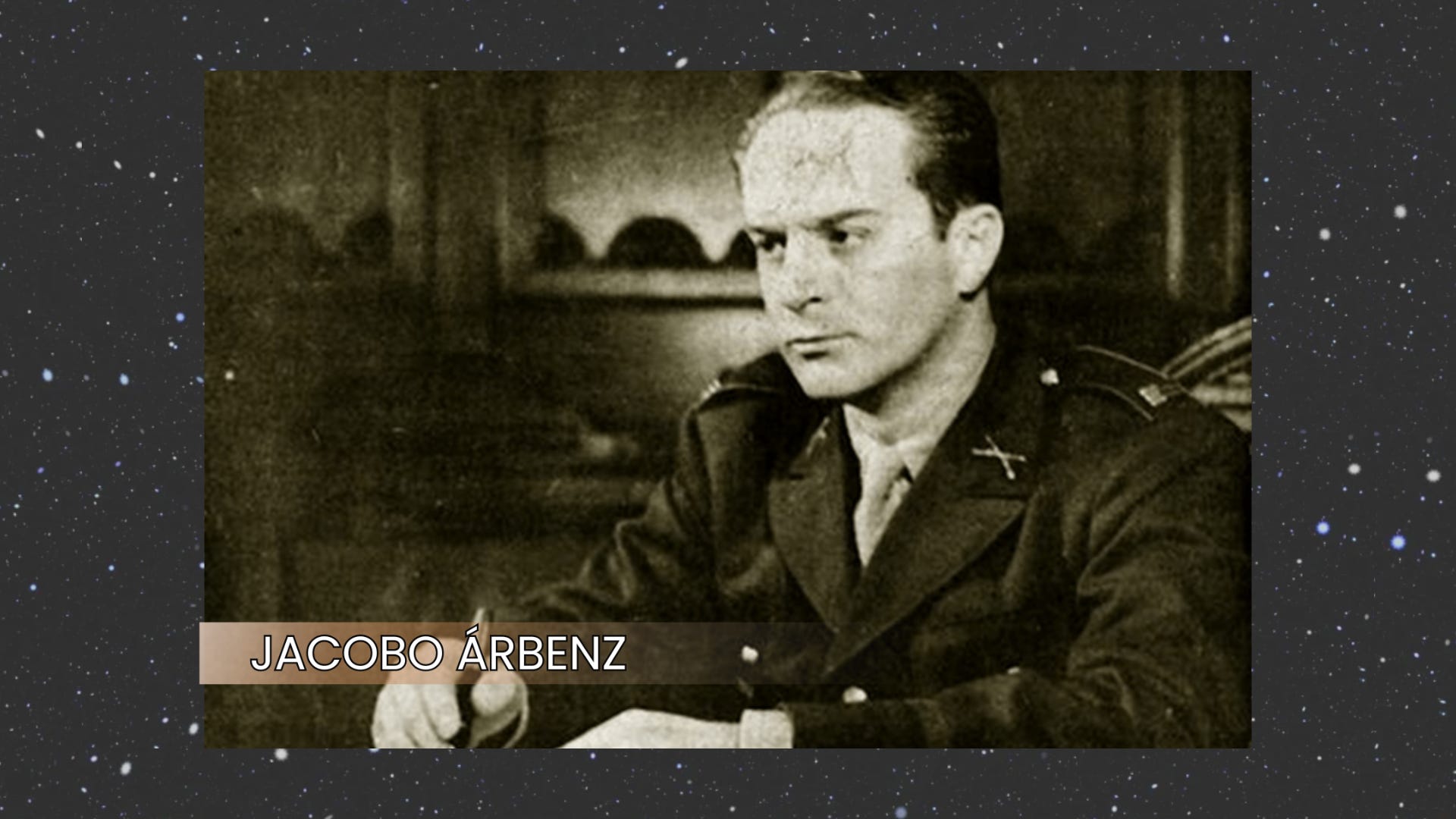
It’s the same sleight of hand that Bernays deployed on behalf of Big Tobacco. There was real harm being done by identifiable perpetrators. The perpetrators, using propaganda and human psychology, removed themselves from the frame. The cause of the suffering relocated—not into the psychology of individual women this time, but into the shadowy machinations of a foreign government. The subject of the story was the Guatemalan government’s dangerous communist obsession, not American corporate conquest. The people who should have been held accountable instead hired Bernays who then helped them write themselves out of the story.
How The Sausage Is Made
You would think, given everything I’ve just described, that the world of marketing & PR would have distanced itself from Bernays. These are, after all, stories that have been written up as exposés in the New York Times. People are very aware of what he did and how he did it. And yet, Bernays isn’t taught in marketing, advertising, and PR programs as a cautionary tale. He is held up as the blueprint. He’s the gold standard. The man isn’t just in the textbooks, the textbooks are written on the frameworks he articulated.
I know this because, until an anomalous experience in August of 2021 caused me to abandon what had been my career in order to do whatever this is, I used to work in marketing and PR.
At one company, on my first day on the job, the CMO sat me down and told me that if I was going to work with him, Bernays was required reading. He would later quiz me on particular campaigns over business lunches. To him, Bernays was the master, and his work was the thing you needed to understand before you could do marketing well. And honestly, he wasn’t wrong.

At another job, on my first day, I was handed a copy of Trust Me, I’m Lying: Confessions of a Media Manipulator by Ryan Holiday. Holiday had been the Director of Marketing at American Apparel and a publicist for, among others, the author Tucker Max. If you’re not familiar with Tucker Max, he built his career in the 2000s writing first-person accounts of his own youthful drinking and sexual exploits. His book I Hope They Serve Beer in Hell spent years on the New York Times bestseller list and was eventually adapted into a film in 2009. And Holiday’s job was to get people talking about it.
But here’s the problem—both the book and the movie suck. That is admittedly my personal opinion, but I’m confident enough in it to present it as fact. It’s low-brow drinking war stories punctuated by fumbling Letters to Penthouse, and let’s just say that it’s not exactly Bret Easton Ellis. To get people to buy tickets for this thing, Holiday knew he was going to have to drum up some good old fashioned controversy.
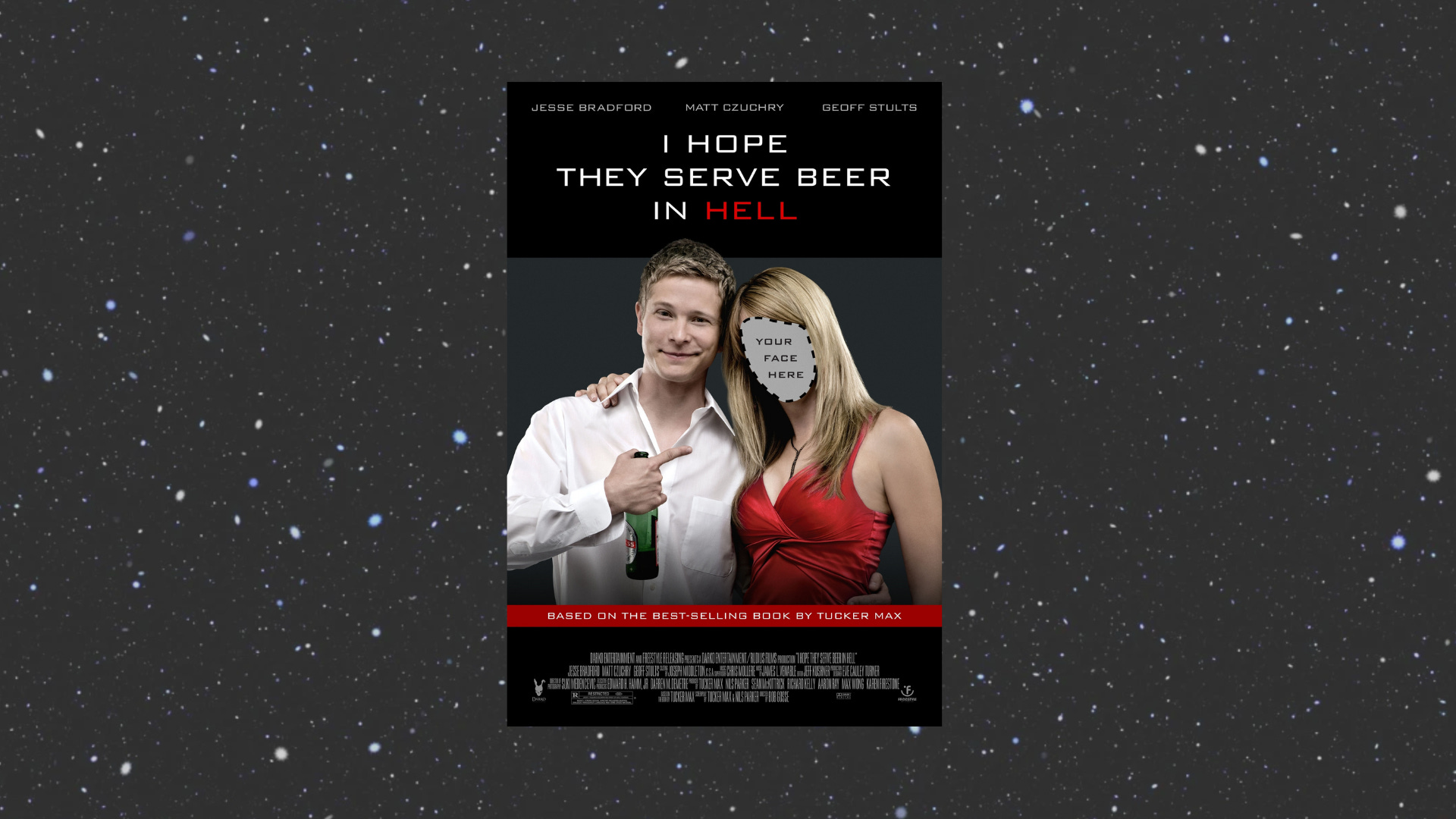
Luckily, Tucker’s book was rife with opportunity. The stories in I Hope They Serve Beer In Hell are, to put it mildly, not particularly feminist in their orientation. But this was a bro book for bros, so it wasn’t exactly on the feminists’ radar either. Holiday knew how to fix that.
Here’s an excerpt from Trust Me, I’m Lying where he gleefully explains what happened next:
“In under two weeks, and with no budget, thousands of college students protested the movie on their campuses nationwide, angry citizens vandalized our billboards in multiple neighborhoods, FoxNews ran a front-page story about the backlash, Page Six of the New York Post made their first of many mentions of Tucker, and the Chicago Transit Authority banned and stripped the movie’s advertisements from their buses. To cap it all off, two different editorials railing against the film ran in the Washington Post and Chicago Tribune the week it was released. The outrage about Tucker was great enough that a few years later, it was written into the popular television show Portlandia on IFC.
I guess it is safe to admit now that the entire firestorm was, essentially, fake. I designed the advertisements, which I bought and placed around the country, and then promptly called and left anonymous complaints about them (and leaked copies of my complaints to blogs for support). I alerted college LGBT and women’s rights groups to screenings in their area and baited them to protest our offensive movie at the theater, knowing that the nightly news would cover it. I started a boycott group on Facebook. I orchestrated fake tweets and posted fake comments to articles online. I even won a contest for being the first one to send in a picture of a defaced ad in Chicago (thanks for the free T-shirt, Chicago RedEye. Oh, also, that photo was from New York).
I manufactured preposterous stories about Tucker’s behavior on and off the movie set and reported them to gossip websites, which gleefully repeated them. I paid for anti-woman ads on feminist websites and anti-religion ads on Christian websites, knowing each would write about it. Sometimes I just Photoshopped ads onto screenshots of websites and got coverage for controversial ads that never actually ran.
The loop became final when, for the first time in history, I put out a press release to answer my own manufactured criticism: TUCKER MAX RESPONDS TO CTA DECISION: “BLOW ME,” the headline read.”
Wild right?
There are a few things I want to point out about this.
First is the obvious fact that the structure of what Holiday is describing is identical to the “torches of freedom” campaign executed by Bernays. He was tapping into real grievances about things like sexism and the prevalence of sexual assault on college campuses. Holiday didn’t manufacture the raw material of the anger, he just threw gasoline on it and lit the match.
The other thing I want to emphasize is that this is what is considered day one reading for any eager young marketer. These are the ideas that are guiding brand strategy and PR campaigns. This kind of behavior is what you are meant to aspire to.
What I want to be clear about is that these are not bad people. The CMO who handed me Bernays, the CEO that handed me Holiday—these are people I still love and trust and call friends. They’re wonderful, intelligent, and ethical people.
That might sound defensive, but it’s not meant to be. I emphasize this point because the nature of these kinds of frameworks is that they are constructed to be invisible to us. It’s not that they aren’t obvious, it’s that they are always just out of frame. The truth is immediately obvious once you see it, but your eyes are somehow always busy elsewhere.
I couldn’t see it either. There are a million reasons.
None of what Bernays or Holiday was proposing was presented to me as something to be troubled by. In fact, it was something to be emulated. I was young in my career and eager to learn and excel. I absorbed it all without any particular disturbance, because it was in books—textbooks even! I had gotten a degree in it. Marketing is everywhere, and it was fascinating, and I was genuinely good at it. For someone with a brain that runs on words and ideas and thrives with constant creative output, it had seemed like the natural career. And all of it was thoroughly couched in the language of psychology that I had grown up with.
I used to joke, in those years, that marketing was just psychology for sociopaths. It has been an uneasy journey to recognize how right I was—and more than that, to recognize that even knowing intimately how the sausage is made, I hadn’t really seen it.
To be clear about what I mean: it’s not that marketers are sociopaths. Most of the ones I know are thoughtful, empathetic people who would be genuinely and rightly appalled by the suggestion. What I am saying is that much of the foundational architecture of marketing—its core assumptions about human beings and its operating methods—are deeply and inherently sociopathic. It generally treats people not as minds to be persuaded through reason but consumers to be manipulated via their basest instincts. Their hopes, their fears, their insecurities, and their deepest longings are levers to be exploited. And there is no need to have real remorse for any of it, because this is just how things are done. If you don’t do it somebody else will.
And that particular brand of sociopathy has been so thoroughly reframed in our culture that we barely recognize it as such.
A Koan
I wrote everything up to this point over a few feverish days in March. And to be honest, when I was writing it, I didn’t really understand why. On its face, this story doesn’t seem to have much to do with the topics that I usually discuss on this show. But I sensed that there was a deeper connection to the overall direction of my work, and even though I didn’t totally understand what that was, it suddenly felt critically, urgently important.
I often have the experience during the creative process where an idea suddenly becomes incredibly important to me long before I understand why. It happened to me in May of 2022 the first time that I heard Diana Walsh Pasulka say that Plato’s Cave is not an allegory. And again the first time I read Jung’s description of a flying saucer as an “archetype with physical components.” And again, just a few weeks ago, on a phone call when Jeffrey Kripal told me that trauma is the phenomenon.
These ideas have haunted my work precisely because I don’t really understand them. Each of them exists as a kind of Zen koan. A koan is a paradoxical anecdote or statement used in Zen Buddhism to exhaust the analytical intellect and trigger sudden, intuitive enlightenment—like contemplating the sound of one hand clapping. Each of these ideas is their own kind of koan and pursuing them has cracked me open in all kinds of unexpected ways, even as the ultimate answers continue to elude me. Because the thing about seeking and striving is that they are inherently generative, even if one never arrives at one’s destination—maybe even especially when you don’t.
Anyway, for reasons I didn’t understand at the time, this Freud and Bernays story struck me in the same way that these other koans had. And I was suddenly and immediately obsessed almost to the exclusion of anything else.
When I began, I thought I was writing a fairly straightforward episode about the discovery and weaponization of the unconscious, the origins of modern propaganda, and the way that all of this has been translated into systems of control. And that is still part of what this episode is about. But the deeper I got into the material, the more I realized that the story was not only about propaganda or psychoanalysis or the sinister architecture of modern persuasion.
It was about the impossibility of finding an epistemically sturdy place to stand outside of all of that to determine what’s actually true.
It would be easier if Freud had been simply wrong or simply lying. But Freud saw something real. Human beings are not transparent to themselves. We absolutely do repress what we cannot bear to know. We disguise our motives from ourselves. We create stories that protect us from unbearable truths. The unconscious is real enough that anyone who has ever tried to understand their own life honestly eventually runs into their own—usually to dramatic and transformational effect.
The point I want to make is this:
Freud gave us tools for seeing what is hidden—but those same tools can be used to hide what is right in front of us. He gave us a language for trauma, repression, fantasy, and desire, and that language has the power to reveal truth or bury it, depending on who is wielding it.
That is the koan at the heart of this story—the thing that helps us see can also be used to blind us.
Bernays inherited that understanding, systematized it, and scaled it. If Freud taught the modern world that people do not always know what they want or why they suffer, Bernays turned that insight into a technology of social control. He understood that public opinion does not simply arise on its own. It can be shaped, managed, and even engineered through symbols, emotions, authority, repetition, and through carefully manipulated desire.
And once you see that, you can’t unsee it.
You start to recognize the machinery everywhere: in advertising, politics, crisis communications, media narratives, personal branding, therapeutic language, and the endless corporate-washed public rituals through which power endeavors to present itself as compassionate while simultaneously protecting itself from any accountability or consequence.
But then, as it always does, the koan doubles back on you.
Because the moment you begin recognizing and pointing out the frame, you are also creating a frame. The moment you analyze someone else’s narrative, you are weaving a narrative of your own. The moment you say, “Look at how this language is managing your perception,” you’re already engaging in the same game you’re trying to expose.
You can rage against the machine all you want, but you will always, inevitably, be raging inside of it.
And I think that is why this story has had such a hold on me. It is not just a story about Freud, Bernays, or the birth of modern propaganda. It’s a story about the human problem of interpretation itself. We need interpretation because appearances can deceive us. But interpretation can also become the mechanism by which what is obvious gets made obscure. We need experts because some truths require training, context, and depth to competently parse. But expertise can also become the priesthood that stands between people and the reality of their own experience.
We need symbols because symbols are the language of meaning—and human beings cannot live without meaning. But symbols are powerful. They can be used to evoke and convey complex ideas in a way that transcends normal communication, but they can also be used to bypass reason and plant seeds in the mind that grow into entire forests of thought populated by strange beasts if left unchecked.
So the question is not whether we can escape the machinery entirely. I don’t think we can.
The question is whether we can become conscious of it without becoming servants of it. Whether we can use interpretation without allowing it to become domination. Whether we can acknowledge complexity without turning complexity into fog. Whether we can create the shared meaning necessary to our survival without using it to manufacture or override consent. Whether we can make space for the aspects of our reality that are hidden without using the hidden as a smokescreen to obscure what is obvious and true.
The Abstract Becomes Horrifyingly Personal
And then, before I understood why I had written any of this, these abstract questions all became horrifyingly personal.
Just a few days after I found myself stalled out with this episode, I was confronted with multiple allegations of sexual misconduct against my former best friend and creative partner, Jay Christopher King. Some of these allegations came from women who had come to him in the context of seeking support for their anomalous experiences through his role as director of The Experiencer Group.
That context matters enormously. People come into experiencer spaces carrying complicated histories, and many are desperately seeking to make sense of events that have destabilized their relationship to their memories, their bodies, their loved ones, and to reality itself. This makes people particularly vulnerable to outside influence and control by those who seem to be offering comfort in the form of belonging, protection, or answers.
It’s important to understand that histories of sexual abuse and early-life trauma are prevalent in the experiencer community. Sexual trauma is especially common among people who report abduction experiences, and is often reported as a part of the abduction experience itself. I want to be clear that I’m not suggesting that one thing can be reduced to the other, or trying to offer some cheap psychological explanation for a genuinely anomalous experience. The connection between sexual trauma and the abduction experience is far too complex to adequately explore here, but suffice to say it’s very real.
The salient point is that sexual trauma is prevalent in the experiencer community. And people with histories of sexual trauma may be especially vulnerable to certain forms of sexualized predation, particularly when the predator knows how to exploit trauma-based patterns around trust, shame, dissociation, boundaries, attachment, authority, or the need to be believed. Anyone holding power in experiencer spaces has an obligation to understand these dynamics and to act accordingly to prevent doing harm.
Jay understood that. I know he did, because he was the person who helped me to understand it.
There were so many late nights talking about exactly this and about the importance of creating safe containers for experiencers to connect and tell their stories. I admired Jay so much for his compassion and for the ways he was actively transmuting his own trauma into work that helped people integrate their own.
I remember watching him from the audience while he hosted an experiencer panel at a conference. At one point he stopped the conversation to make an impassioned argument that the reason we don’t talk about the hybridization program more is because it is ultimately rooted in sexual trauma and what amounts to the trafficking of women and children—things that are taboo and covered up in our society already without the added layer of stigma associated with abductions. And he argued that we’re losing a huge piece of the puzzle by erasing the voices and experiences of women. I remember leaping to my feet with a hoot to applaud him and thinking, “Hell yes! That’s my best friend.”
So when the allegations came, it knocked me entirely off center. I was already experiencing a series of dark nights of the soul with regard to what is real and whether I—or anyone—has the ability to truly know what’s real. And then suddenly I was faced with a seemingly impossible riddle—a dark koan, too awful to contemplate, but too charged to ignore.
Was this person—my best friend—the person that I knew him to be? Or had it all been sleight of hand—a flourish of the wrist that kept my eyes fixed on the performance while drawing my attention away from the one place I wasn’t supposed to look? The question wasn’t just if I could trust him, but could I trust myself. After all, I’d spent the last few years communicating with this person constantly, traveling together, doing deep creative work together, meeting each other’s friends and spouses, and staying in each other’s homes. How could it possibly be that he wasn’t who I thought he was?
Responding to Jay Christopher King’s Statement
The black-tar humility laid down by having had my worldview rocked is still fresh and sticky, and it prevents me from saying that I know with certainty what happened with Jay. The reality is that I can’t say for sure what he did or why he might have done it. It’s clear to me now that I never really knew him, and so any story that I tell now, no matter how forthright I am in doing so, is necessarily a confabulation—an attempt to retroactively manufacture a story that can make sense of the senseless. And I recognize that there’s what I’ve been told, there’s what I believe about what I’ve been told, and then there is the truth. I have never been more aware that those are three entirely different things, and everything that follows should be considered in that context.
That said, just because I may have no ability to get to the ultimate truth doesn’t mean that I can’t make a judgement and form an opinion, through logic and reason, about the essential nature of the situation. And given recent events, I feel that I have a new clarity about how to recognize who is being truthful, regardless of my ability to get at the actual truth.
Because the thing about the truth is that it has a coherence to it. It hangs together naturally because it actually happened that way. The truth doesn’t have to flee from new information, because any new information already belongs to it. It will only make the picture more clear.
A lie has a different relationship to information. A lie has to run. A lie has to manage what can be seen. It has to redirect, omit, qualify, contextualize, and control the frame. This is because a lie, by its very nature, is an attempt to conceal. The only reason to lie is to hide something.
When asking if someone is telling the truth, it’s as simple as establishing whether they are willing to hand you the whole deck of cards for your inspection without reservation or whether they’re still trying to hold onto it and to draw your attention away from what they still have up their sleeve.
In my personal opinion, Jay has not behaved like someone who wants to drag the truth out into the light. He has acted like someone who has something to hide.
Since this whole thing went public, he’s ghosted virtually everyone. His few attempts at offering an explanation for these allegations have been delivered primarily to the people furthest removed from the situation—people who conveniently have the least context and the least ability to fact check him. With anyone who does have a view into his actual life, the pattern has been that once it is clear that a person has more of the story than he is able to answer for, he simply goes silent. With very few exceptions, the people who, up until very recently, were his closest friends, colleagues, and confidants haven’t even heard from him. He went dark on social media, and aside from booting out people who posted criticism of him, he had gone completely silent on The Experiencer Group’s private website, as well. That was until he posted a statement on or around May 24th.
I no longer have access to The Experiencer Group. I was sent these screenshots that I’m about to share with you by members who still have access. I want to be clear that I would never publicly share or disclose anything from The Experiencer Group, which is meant to be an anonymous group. I’m making an exception here, and only here, because I believe that it is in the genuine public interest.
Here is what Jay had to say for himself:
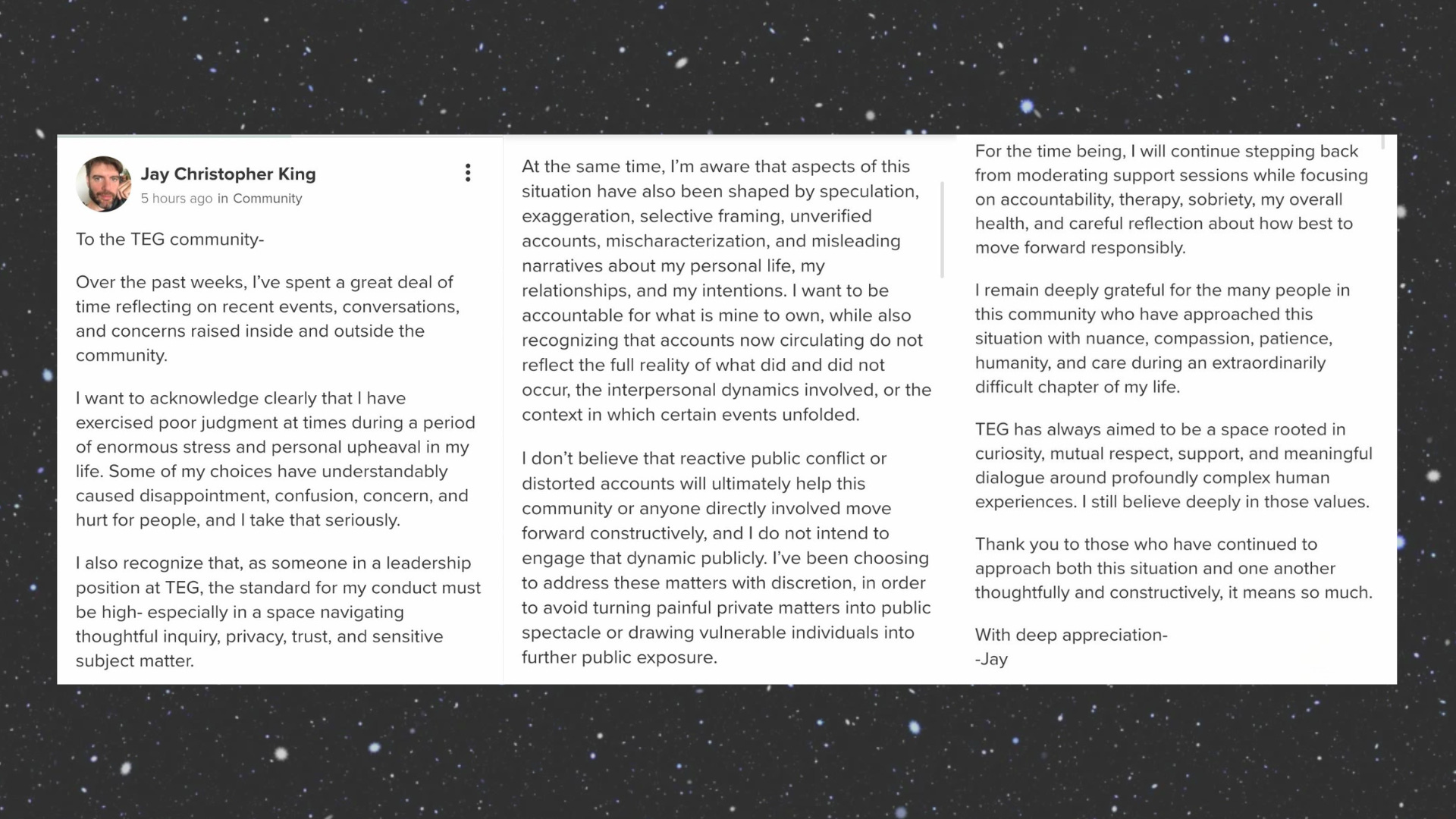
To the TEG community-
Over the past weeks, I’ve spent a great deal of time reflecting on recent events, conversations, and concerns raised inside and outside the community.
I want to acknowledge clearly that I have exercised poor judgment at times during a period of enormous stress and personal upheaval in my life. Some of my choices have understandably caused disappointment, confusion, concern, and hurt for people, and I take that seriously.
I also recognize that, as someone in a leadership position at TEG, the standard for my conduct must be high—especially in a space navigating thoughtful inquiry, privacy, trust, and sensitive subject matter.
At the same time, I’m aware that aspects of this situation have also been shaped by speculation, exaggeration, selective framing, unverified accounts, mischaracterization, and misleading narratives about my personal life, my relationships, and my intentions. I want to be accountable for what is mine to own, while also recognizing that accounts now circulating do not reflect the full reality of what did and did not occur, the interpersonal dynamics involved, or the context in which certain events unfolded.
I don’t believe that reactive public conflict or distorted accounts will ultimately help this community or anyone directly involved move forward constructively, and I do not intend to engage that dynamic publicly. I’ve been choosing to address these matters with discretion, in order to avoid turning painful private matters into public spectacle or drawing vulnerable individuals into further public exposure.
For the time being, I will continue stepping back from moderating support sessions while focusing on accountability, therapy, sobriety, my overall health, and careful reflection about how best to move forward responsibly.
I remain deeply grateful for the many people in this community who have approached this situation with nuance, compassion, patience, humanity, and care during an extraordinarily difficult chapter of my life.
TEG has always aimed to be a space rooted in curiosity, mutual respect, support, and meaningful dialogue around profoundly complex human experiences. I still believe deeply in those values.
Thank you to those who have continued to approach both this situation and one another thoughtfully and constructively, it means so much.
With deep appreciation-
-Jay
Besides the fact that, as far I know, no one who was actually hurt by Jay is in any way aware of his new accountability kick, what I found most impressive about this statement of commitment to accountability is that there is no actual accountability. There are a lot of words here, but somehow the misdeeds, the victims, and the perpetrator all conveniently fail to make an appearance.
In the proud legacy of modern PR, Jay has expertly demonstrated with this statement how one can simultaneously give the reader a lot to unpack while saying nothing at all. He uses therapeutic language, accountability language, complexity language, privacy language, all arranged in a way that appears morally serious while refusing to address anything in particular. It’s like a firework meant to take the shape of accountability, fired off with a lot of pomp and circumstance, but which dissipates as quickly as it appears leaving no trace.
In his statement, Jay uses a lot of words that suggest contrition, yet there is not one thing that he identifies as having done wrong, only things he is “reflecting on” and “taking seriously.” He can’t say exactly what it is that he is taking seriously, or what “taking it seriously” looks like in practice. But he wants to be clear that the things that he is taking seriously aren’t any of the things that he was accused of—which are all mischaracterizations being perpetrated by no one that he can point to specifically, for reasons that are never even alluded to. He suggests that if we had more context we’d understand. But also, he will not be providing that context because there are vulnerable people involved who need to be protected. It’s unclear what the involvement of the “vulnerable people” here is, because again, there have been no victims, only some people who were “disappointed” and “confused” by his poor judgement. But that poor judgement wasn’t really him, you guys. He was just going through a really hard time in his life.
So let me ask you—does any of that have the ring of truth to you? Do you feel like you have more insight into this situation or do you feel like you just got worked over by a sleazy used car salesman?
And Jay—since I know you’re listening—here is one of the many ways that I know you aren’t being truthful. Because you said that you wish to “avoid turning painful private matters into public spectacle or drawing vulnerable individuals into further public exposure.” But the one way that you could actually prevent that from happening—the way that you can actually protect those vulnerable people from going through further trauma in public—would be to just tell the truth.
You don’t need to say the names. You don’t need to give the gory details. Just the truth.
And the truth of my story is this: throughout our friendship, you lied to me, exploited me, and manipulated my trust. And in the fall of 2023 I believe that you somehow participated in an elaborate scenario in which I came to believe that I had been drugged after a conference and was subsequently being actively targeted by shadowy intelligence-connected people as a result of seeing things I shouldn’t have seen. Whether you actually believed any part of that story yourself is not something I can say for certain—at least not yet.
But I know what it did to me. It made me afraid. It made me doubt my own perception. It alienated me from people who might have helped me. It put me in a box and made my world small. It made me believe that you were the only person in the world that I could fully trust, and it created a near bottomless well of empathy in me for what I believed you had been through in that hotel room. As a result of that situation—and only because of that situation—I was willing to put up with things and overlook things and forgive things that I never would have allowed even once from anyone else under any other circumstances. And for 29 months of my life, I felt unsafe every minute of every day—even in my own home.
But I don’t have to tell you that. You had a front row seat to all the ways that I was privately unraveling.
And in recent weeks, I have heard from so many others who have described their own versions of that same disorientation: the same confusion, the same self-doubt, the same nightmarish process of trying to piece their reality and sense of self back together in the aftermath of you.
And if you would just admit to the things you have done, then maybe all of those people could begin to move on and find some peace. We’d no longer have to lose sleep asking ourselves whether being victimized by you means that it’s our burden to protect the world from you. We wouldn’t have to do the calculus of trying to determine how much of our humiliation and trauma we should be willing to put on display in order to—hopefully, maybe—prevent it from happening to someone else.
You could release all of us, including yourself, from this wretched hell that you have created. You could—finally, at last—stop living your life in terror, waiting for all the other shoes to drop. And maybe, with all that time and headspace, you could figure out how to tell a new story.
Pulling The Pin
OK. So I know I just dropped a bomb there. And I recognize that there is a lot more that I need to answer for regarding what happened in 2023. And I will. I just need some more time—maybe a lot more time. I’m being very sincere when I say that I don’t know what happened anymore, only that I believe the story as I came to understand it is not how it actually went down.
But something very serious did happen—something that left visible marks on the bodies of some involved that persisted for weeks afterward. There were witnesses. There is evidence and documentation. This was not a delusion or a fever dream.
And I know that I need to get to the bottom of it. I know that I need to face it and find out, once and for all, what actually happened to me and why.
But this is a very serious situation involving real people with real lives. I am also never going to do anything to betray the trust of other victims who wish to remain anonymous, and so I have to navigate that with care. And I am, admittedly, still in a rather shellshocked state after everything that’s happened. I’m grieving and I’m healing, and the thing about both of those processes is that it’s impossible to know where you are in the process when you’re inside of it. All of this means that I need to move slowly and take things one day at a time.
But I am getting stronger and clearer everyday. And I will face this. And when I do I will be honest about what I find.
The Epistemic Black Boxes of Ufology
And in the meantime, what is the point of all this? What am I even trying to say? This episode went a lot of places, but in a real sense, I never really landed the plane. I think that’s reflective of where I am right now. I’m on a journey to understanding something, but I haven’t arrived.
But one thing that I do hope people take from this episode—and something that I will be parsing out and exploring in much more depth in the coming weeks—is this:
There are certain core beliefs that run through the experiencer community. These include belief in non-human intelligences, belief in non-material aspects of reality, and the belief that shadowy state and non-state intelligence agencies are interested in these things and may, at times, run operations in and around the experiencer community.
I personally believe all of those things are true. Or at the very least, I believe there is more than enough evidence to take all of them seriously. So I’m not saying that these beliefs are wrong. What I’m saying is that they make us vulnerable.
Because each of these ideas functions, in a certain way, as a conceptual black box. It is an avatar of an architecture we assume is there because there are so many context clues suggesting that something has to be there. And also because so many of us have had direct experience of whatever it is. But the actual structure of the thing is not accessible to us. We don’t know exactly what non-human intelligence is, or exactly how the non-material aspects of reality operate. We don’t have any way to objectively assess what intelligence agencies are doing in this space, or where their interests begin and end, or which strange events are connected to them and which aren’t.
And when we encounter something that is real but not fully knowable, we inevitably project into the gap. We take our experiences, our fears, our intuitions, our research, our trauma histories, our pattern recognition, our spiritual frameworks, our politics, our needs, our wounds, our gifts, and our best guesses, and we begin to build a story around the thing we cannot directly see.
There is no way not to do this, by the way. And no one is exempt from it. This is what human beings do when we encounter the unknown. And for the record, I don’t think that’s inherently a bad thing. In fact, I think it can be a worthy and even necessary enterprise. The projection, the interpretation, the argument, the revision, the ongoing attempt to think clearly about the unknown can be generative and productive. It’s literally how new realities and futures are built.
The problem comes when, in the process of exploring the unknown, we surrender our cognitive sovereignty.
And the terrible thing is that it is very easy to do that without ever realizing that you have.
Because if someone has the motivation to manipulate you, these black boxes become incredibly useful. They can use them to conceal things they want to hide. They can use them to explain away things that should be questioned. They can use them to manufacture fear, loyalty, confusion, dependency, or silence. They can take your legitimate openness to mystery and your genuine empathy for others and turn it into a mechanism of control.
And if you were a predator, it would make sense that the experiencer community would have a lot of appeal.
This is a community full of deeply sensitive and compassionate people who are looking for connection. Many have extensive trauma histories. Many have spent years feeling alienated from consensus reality and from the people around them. And every person in this community, by definition, has had some kind of experience that fundamentally and permanently destabilized their relationship to what the mainstream culture says is real.
That doesn’t make us irrational or foolish or weak. But it does mean that many people arrive in this community already in a state of destabilization. And then, once they are in this world, they are surrounded by enormous mysteries, intense personalities, powerful stories, and very few reliable maps for how to maintain discernment while your entire worldview is being rearranged.
That creates a very particular kind of vulnerability that can be exploited in all kinds of different ways.
For example, a public figure in the community might want to keep his spouse hidden so that he can more easily entertain extramarital affairs, and so he tells his wife and the people around him that he’s being targeted by intelligence groups for his work, and so it’s too dangerous for her for their relationship to be public. Or someone might influence a colleague’s perception and put them in a state of fear by convincing them their private Signal chats are compromised, perhaps by emailing that colleague’s spouse at work with cryptic references to the conversation they’re having in real time on Signal. Or someone could drug an experiencer and convince them afterward that what happened was a military abduction or an anomalous experience.
These are hypotheticals, but you see where I’m going with this.
I think this kind of thing is far, far more common than I ever realized. This was partly because I didn’t see how insidious it was. I didn’t understand how susceptible I could be to it, even as a fairly rational and intelligent person. And frankly, as is true for most decent people, it was hard for me to truly wrap my mind around the fact that there are people in the world who would treat their fellow human beings in this manner—and that they can look like your best friend.
But there are. In fact, it’s estimated that 1 in 100 people is a psychopath. And I’d expect that the number of people with dark triad personalities is significantly higher in the UFO community than in the regular population simply because there is so much opportunity here. Fish-filled reefs attract sharks.
Part of what makes this community such a perfect hunting ground is the silence around the predation. And that silence doesn’t exist because people are stupid or because they don’t care. It exists because almost every incentive in the community is arranged, quietly and subtly, in favor of not saying the things you aren’t supposed to say.
Some of those incentives are personal. It’s humiliating to admit that you were manipulated, especially in a community where so much of the work is about perception, discernment, consciousness, and reality. In a community where one of the core struggles is the struggles for credibility, no one wants to say: I didn’t see what was happening to me, I was fooled, I was wrong. No one wants to admit that the story they were living inside may have been partly authored by someone else. So people protect themselves from embarrassment. They minimize it. They spiritualize it. They turn it into a lesson. They convince themselves in one of a thousand different ways that it’s better not to make a scene.
Some of the incentives are social. For many experiencers, the relief of finding community is profound. People need to belong. Again, that isn’t weakness. That’s just being human. And for people who have felt rejected by the mainstream and who have finally found a place where they can speak honestly about the most bewildering and transformative experiences of their lives, the pressure not to threaten that belonging can be enormous. The incentives to overlook things, to not challenge authority, and to generally not rock the boat are strong.
Some of the incentives are legal. Talking publicly about people in any context carries legal risk. While it’s true that truth is an absolute defense against defamation, anyone can sue anyone for anything. You don’t have to have told a single lie, broken a single law, or done a single thing wrong to end up with overwhelming legal expenses. So the literal price of speaking up can be too high for many people.
And some of the incentives are professional. There is a particular ecosystem of UFO media, podcasts, conferences, private gatherings, and Signal chats. If you have a platform, it is enormously helpful to be included in that ecosystem. And it’s fun. It feels good to be treated as a peer among the very small collection of people on the planet who are seriously engaged with the things you care about most. That’s not sinister. It’s human. But it also means that there are, inevitably, unspoken politics to these spaces, and unspoken rules about what can be said, where it can be said, and about whom. And, to be perfectly blunt, there are far too many big names in this space who are willing to throw their weight around to stifle speech they don’t agree with and exclude people who don’t toe the party line.
But I also want to be clear that I’m not pointing to some nefarious system of control here. From what I’ve seen, that doesn’t exist—at least not at the level of the public ufology ecosystem and not in the overt, structured way that some people imagine. I’m just pointing out that the social and professional incentives in this community are strongly weighted toward not saying the unpopular thing aloud if you want to continue to be included.
And that, again, makes us susceptible.
The other problem is that people are not really educated on this process—and how could they be? Most people don’t come to this topic intentionally. You fall through a trap door somewhere, and suddenly you’re just in it. And so, by the time you get here, you’re already destabilized. Then most of what you find is trying to give you answers, or at least hypotheses, about what is really going on with reality. But very little of it addresses what is happening inside of you as you try to metabolize all of this—and it turns out that is at least half, if not more, of the puzzle.
We can spend so much time looking at the anomalous that we lose perspective on ourselves. We become unaware of how epistemically vulnerable we have become. No one really warns you about that, so most people only learn by getting their ass kicked by it. And then, once that happens, the incentive not to talk about it is even higher, because who wants to admit that?
To be honest, I would gladly bury myself alive rather than tell anyone any of this. But continuing to participate in the silence now that I know what it conceals would be worse. So here we are.
It may not be polite to talk about these things. It may not win me any friends. It may make some people uncomfortable. It makes me uncomfortable. But I genuinely love this community, and I don’t know how to move forward authentically, ethically, and responsibly with anything but the truth.
There is a reason people say that addiction is a family disease. It doesn’t only live in the person suffering from the addiction. It lives in the silence around them, in the well-intentioned accommodations that everyone makes for them, and in the stories people tell (or never tell) to keep the system of reality denial intact. It’s a disease that is born of the things that everyone knows, but no one is allowed to say.
I think something similar is true here. The sickness is not only in the predators. It’s in the silence that protects them. It’s in the social machinery that teaches people to look away. It’s in the collective instinct to preserve the appearance of harmony at the expense of the people being harmed and to preserve the appearance of credibility at the expense of the actual truth.
This community has been a lifeline for so many people. It has been a lifeline for me. But if this community is going to be what so many of us believe it can be—if it is going to be a place where the mystery can be approached with seriousness, humility, courage, and ethical integrity—then we cannot keep pretending that “disclosure” only means figuring out which lights in the sky might not be ours.
It also means exposing the true architecture of secrecy, stigma, repression, manipulation, and control that got us into this mess in the first place. What has gone wrong that such basic truths about our reality have come to be hidden from us? What has happened that our governments treat us not as fellow humans to be served in the collective enterprise of civilization, but rather as a population to be managed, studied, frightened, pacified, and fed upon by systems that we’re never allowed to understand?
This isn’t different from the question of what has happened in the experiencer community or in my personal story. From the micro to the macro there is something very wrong with the way that humanity is currently existing. And humanity, it seems, is on the brink of understanding exactly what that is, with a little assistance from the phenomenon itself. And that’s what I want to explore in my upcoming work.
As for me, I’m still trying to navigate how to tell the more personal aspects of my own story—or even if I even should. I am deep in contemplation about what is the right way to proceed. I’m coming out of a prolonged period of trauma and confusion, and I’m just trying to get my bearings. I’m doing my best to be aware and attentive to the feelings of other victims in the community. And, to be totally transparent, I recognize in myself that I am still on unsteady emotional footing.
This situation is very serious and very complex, and however I decide to proceed it needs to be from a place of clarity and service. And I may never give an answer that satisfies everyone.
But, no matter what I decide about that, I am committed to speaking openly and honestly about the mechanisms of this, including being as transparent as I can be about how I have been personally impacted by it and how I have unknowingly participated in it. Because, just like with everything else in disclosure, I think we have to get past the shame and stigma before we’ll be able to begin to have a real conversation.
Until next time.


